
GSK-Nuvalent buyout bears fruit, diabetic obesity drug raises the bar, and more
Weekly Readout #15: Week ending July 24, 2026

Disclaimer: This newsletter is for educational and informational purposes only and does not constitute medical, investment, or financial advice, nor does it establish a provider-patient relationship. Content may include forward-looking statements and discussions of investigational therapeutic candidates that are not FDA/EMA approved; their safety and efficacy remain unestablished and clinical outcomes are unpredictable. While we strive for accuracy, all information is provided as is without guarantees. As of the date of publication, the author holds no direct equity positions in the specific companies mentioned in this issue nor receives third-party compensation for this coverage. Please find a complete version of our disclaimers at the bottom of this article and on our About page.

Press ⬇️ to go down to a section and ⬆️ to go back up to the Table of Contents
Table of Contents
This week, we discuss:
China Biotech
Approvals
Clinical Trial Data
China Biotech
Wondering why we discuss China Biotech every week? Tap here to learn more.
Ex-FDA Director Richard Pazdur Talks Streamlining & Global Collaboration Amid Race with China
On July 22, 2026, AACR D3 hosted a fireside chat with Richard Pazdur, former director of the FDA’s CDER (a division that oversees small molecule drugs) and founding director of OCE (a division that advises on oncology drugs). Endpoints covered the interview, which I recommend you read in full here. Pazdur argues that broad FDA branches like the CDER are “anachronisms of the past” and should be dismantled. Following the model of the Oncology Center of Excellence (OCE) that Pazdur launched in 2017, he advocates reorganizing the agency around specific therapeutic areas (e.g., oncology, cardiology, psychiatry). Amid concerns over reduced advisory committee (AdComm) meetings and potential political interference, Pazdur called for increased transparency in selecting committee members. He proposed forming a selection committee comprising representatives from the FDA, patient groups, and professional organizations to choose members. Pazdur also stated that China’s growing drug development sector should not be viewed as a threat and that restricting opportunities from the region would be “very short-sighted”. Rather than relying solely on single-country data, he urged collaboration to incorporate advances from China directly into global, multi-regional clinical trials.
These structural reforms, transparency initiatives, and closer collaboration with Chinese R&D appear to be more of a middle ground, in the midst of warring hawks and doves in Washington. FDA reform is sorely needed as the “Cautious Regulator” Problem is a major contributor to Eroom’s Law, a pithy but unfortunate observation that underscores the ballooning cost of domestic biotech R&D. In contrast, China’s drug regulator, the NMPA, has undertaken sweeping reforms that accelerate innovation (we covered this here), leading to ~2.7-fold cost savings relative to the West. Between 2020 and 2025, China’s NMPA approved 94 novel oncology drugs, outpacing the FDA’s 87 approvals according to Collins et al. Health Affairs Scholar (2026).
Pazdur’s comments also mark a shift on his stance toward China Biotech innovation, from strict skepticism to active collaboration. In 2022, as Director of the FDA’s OCE, Pazdur took a firm regulatory stance against drug applications backed exclusively by clinical trial data from China. He penned a 2022 Lancet commentary highlighting that single-country trials in China lack the ethnic and racial diversity representative of the U.S. population, particularly regarding historically underserved groups. The FDA pushed back against drug developers seeking U.S. approval for PD-1/PD-L1 inhibitors based on trials conducted solely in China (such as the landmark vote against Innovent/Eli Lilly’s sintilimab) without consulting the FDA on trial design or standard-of-care comparisons. Pazdur’s remarks earlier this week outlined a much more collaborative and global vision for Chinese drug development. Pazdur emphasized that clinical trials should be treated as a “universal process” rather than fragmented regional efforts. Rather than attempting to bring completed single-country Chinese trials into the U.S. after the fact, he advocated for collaborating with China to integrate their advances directly into Multi-Regional Clinical Trials (MRCTs) as rapidly as possible.
Sources: Endpoints article, McKinsey article, Collins et al. Health Affairs Scholar (2026), Targeted Oncology article
Merck CEO Warns Congress About Restricting China Biotech Deals
On July 21, 2026, Merck CEO Rob Davis spoke to reporters at PhRMA headquarters to address looming regulatory threats to US-China biopharma collaborations and advocate for balanced national policies. He warned Congress and the Trump administration that overly broad restrictions or bans on US-China biotech dealmaking could threaten the United States’ standing as a global leader in biotechnology and delay access to innovative medicines for American patients. Davis noted that early-stage trials in China can move “twice as fast at half the cost”. He attributed this efficiency to reduced bureaucracy rather than lower safety or scientific standards. These comments arrive as officials at the Treasury Department are reviewing potential limits on US investments in Chinese biotechs, raising concerns over rapid Phase 1 clinical trial speeds and data sharing in cross-border licensing agreements. Both Merck CEO Rob Davis and outgoing PhRMA CEO Steve Ubl stressed that US policy should focus on national security guardrails and boosting domestic competitiveness rather than completely cutting off access to Chinese innovations. Ubl added that blocking these deals would allow China to retain control of critical therapeutic assets and accelerate its own market dominance. Note that Merck is currently co-developing at least three medicines licensed from Chinese Biotechs:
Sac-TMT (licensed from Kelun): This is a TROP2 ADC and is currently being evaluated in multiple Phase 3 trials.
MK-7262 / HRS-5346 (licensed from Hengrui): This is an oral Lp(a) inhibitor and is currently being evaluated in a Phase 2 trial.
MK-2010 / LM-299 (licensed from LaNova Medicines / Sino Biopharma): This is a PD1 x VEGF bsAb and is currently being evaluated in a Phase 1/2 trial.
Sources: Endpoints article
Approvals
GSK - Jideytro (ROS1 inhibitor) / Approved (ROS1+ NSCLC)
In July 2026, the U.S. Food and Drug Administration (FDA) approved Jideytro (zidesamtinib) for adult patients with locally advanced or metastatic ROS1-positive non-small cell lung cancer (NSCLC) who have previously received a ROS1 kinase inhibitor. The asset joined GSK’s oncology pipeline following their $10.6 billion acquisition of Nuvalent, which we covered here. The approval arrived nearly two months ahead of its original September 18, 2026 PDUFA target date, building upon previously granted FDA Breakthrough Therapy and Orphan Drug designations. Jideytro was engineered to address several persistent limitations of earlier-generation ROS1 inhibitors, including treatment resistance, central nervous system (CNS) relapse, and off-target toxicities. Its structure features high ROS1 selectivity, sparing TRK inhibition to minimize TRK-related neurological side effects like dizziness, alongside broad coverage of resistance mutations (such as ROS1G2032R) and CNS penetrance to target brain metastases.
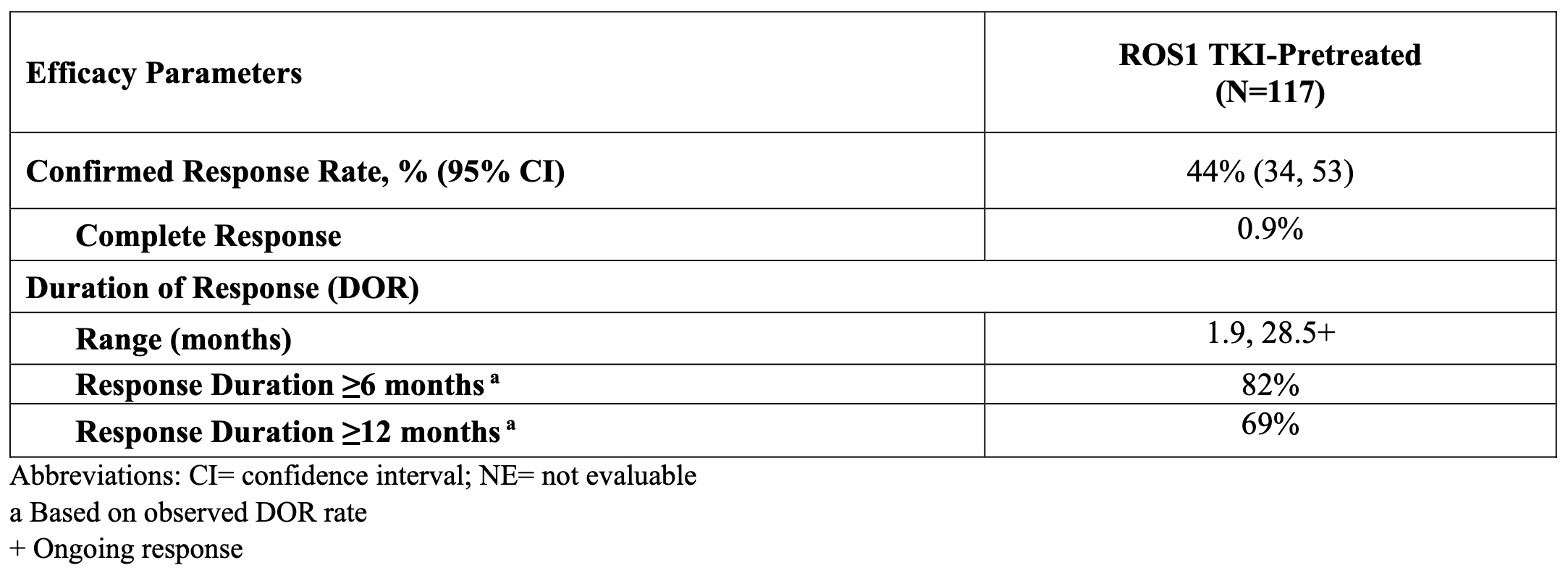
The FDA approval was supported by results from the global, open-label, single-arm Phase 1/2 ARROS-1 trial evaluating oral zidesamtinib in patients with advanced ROS1-positive solid tumors. The results demonstrated improvements on prior generations of ROS1 inhibitors:
Responses in ROS1-experienced patients: In patients who received one prior ROS1 TKI (N=59), the overall response rate was 49%. In patients who received two or more prior ROS1 TKIs (N=58), including lorlatinib, repotrectinib and/or taletrectinib, the overall response rate was 38%.
Responses in CNS metastases: Fifty patients had measurable CNS metastases at baseline as assessed by BICR and had not received radiation therapy to the brain within 2 months prior to study entry. Responses were observed in 48% of patients, including 22% of patients with a complete response.
Responses in patients with ROS1 resistant mutations: Responses were observed in 21 of the 42 (50%) patients who had ROS1 resistance mutations. Of the 26 patients with the solvent front G2032R resistance mutation, responses were observed in 14 patients (54%). Responses were also observed in patients with other mutations (ROS1G2032K, ROS1D2033N, ROS1F2004C/V, ROS1G1957A).
Sources: GSK press release, new Jideytro label
AstraZeneca - Etcamah (SERD) / Approved in Europe (ESR1m HR+ HER2- BC)
AstraZeneca’s next-generation selective estrogen receptor degrader (SERD) and complete estrogen receptor antagonist, Etcamah (camizestrant), received European Commission (EC) approval in July 2026, although it has not yet been approved by the U.S. FDA. In May 2026, following a 6-3 vote by the Oncologic Drugs Advisory Committee (ODAC) questioning whether the trial design and immature overall survival (OS) data justified changing standard treatment paradigms, the FDA extended its Prescription Drug User Fee Act (PDUFA) review date. The extension gives the FDA additional time to evaluate requested analyses, including ctDNA clearance rates and second progression-free survival (PFS2) data, before rendering a final decision. In contrast, the European Medicines Agency (EMA) granted marketing authorization for Etcamah in combination with a CDK4/6 inhibitor (palbociclib, ribociclib, or abemaciclib). The indication covers adult patients with HR+ HER2- locally advanced or metastatic breast cancer whose tumors develop an emergent ESR1 mutation during first-line endocrine therapy prior to radiographic disease progression.
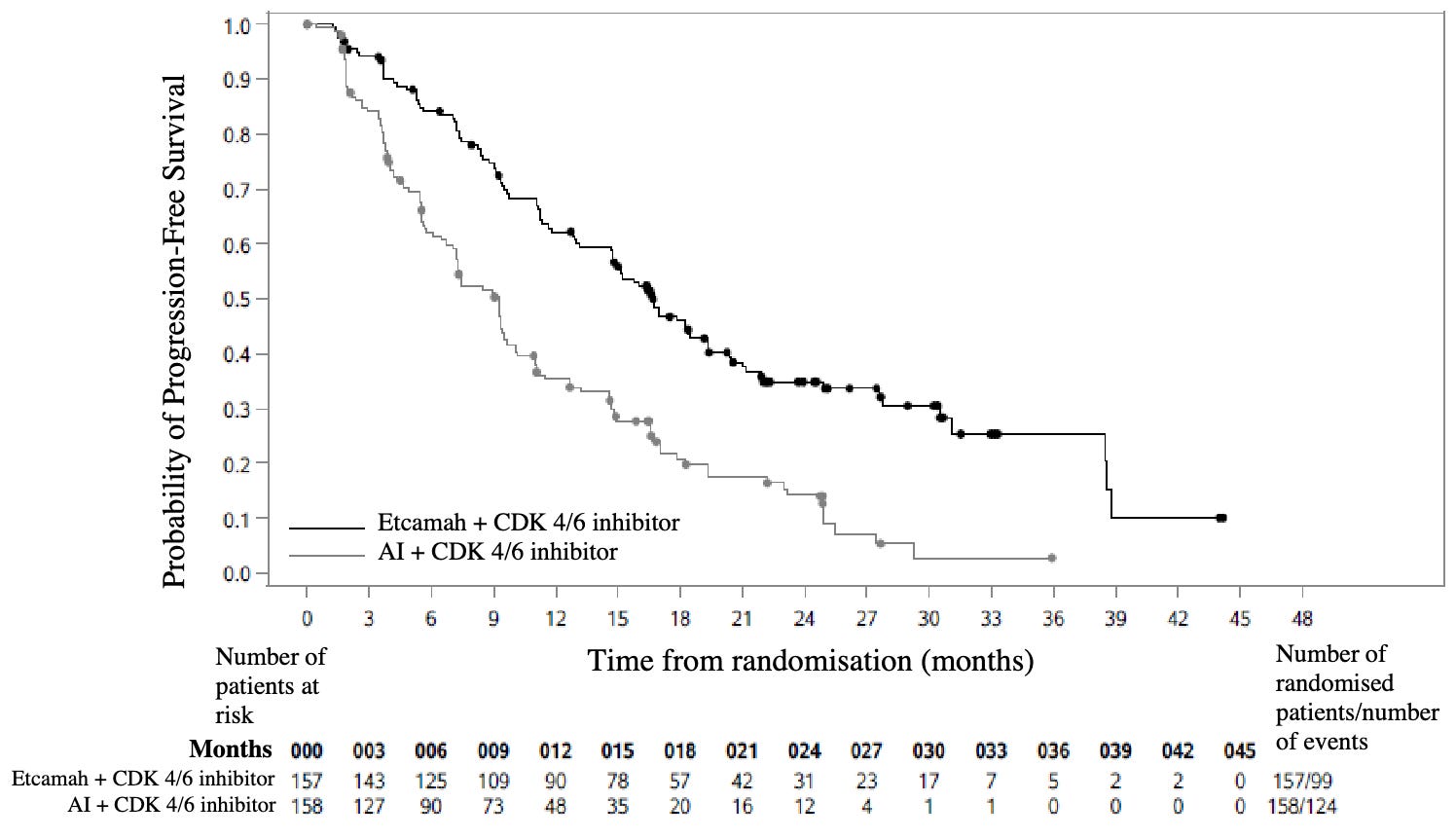
The regulatory applications in both regions were built on the pivotal, global Phase 3 SERENA-6 trial (N = 315), which introduced a novel trial paradigm by utilizing real-time circulating tumor DNA (ctDNA) monitoring to detect ESR1 mutations and estimate tumor burden. Etcamah plus a CDK4/6 inhibitor demonstrated a statistically significant improvement in investigator-assessed PFS, reducing the risk of disease progression or death by 56% compared to continuing aromatase inhibitor (AI) therapy (HR=0.44; see Kaplan-Meier curve below). The median PFS was 16.8 months for the Etcamah arm versus 9.2 months for the control arm. Exploratory liquid-biopsy analyses revealed a median total ctDNA reduction of 99% in patients switched to Etcamah versus a 64% increase in the control arm. Furthermore, 51% of Etcamah-treated patients achieved complete ctDNA clearance compared to just 1.9% in the control arm, which correlated with favorable long-term outcomes. Data for OS remained immature at the time of regulatory submission, representing a core focus of the FDA’s extended review.
Sources: AstraZeneca press release, EMA label for Etcamah
Clinical Trial Data
Eli Lilly - Retatrutide (GGG) / Phase 3 (T2D, obesity)
On July 23, 2026, Eli Lilly announced headline Phase 3 results from its pivotal TRIUMPH-2 and TRIUMPH-3 trials evaluating the investigational triple-hormone receptor agonist retatrutide in adults with obesity, Type 2 diabetes, and cardiovascular risk.
Obesity complicated by Type 2 diabetes and elevated cardiovascular risk is driven by adipose tissue dysfunction, systemic insulin resistance, and lipotoxicity that accelerate atherogenesis and cardiorenal decline. Modern management pairs lifestyle modification with cardioprotective incretin therapies, such as GLP-1 or GIP/GLP-1 receptor agonists, and SGLT2 inhibitors to achieve glycemic control and weight reduction. To build upon dual-incretin outcomes, retatrutide operates as a single peptide triple-G agonist that simultaneously activates GLP-1, GIP, and glucagon receptors. By coupling GLP-1/GIP-mediated satiety and glucose-dependent insulin secretion with glucagon-driven energy expenditure and hepatic lipid turnover, retatrutide drives greater body weight loss and metabolic clearance than single or dual incretin agonists, offering a multi-pathway therapeutic strategy for high-risk cardiometabolic disease.
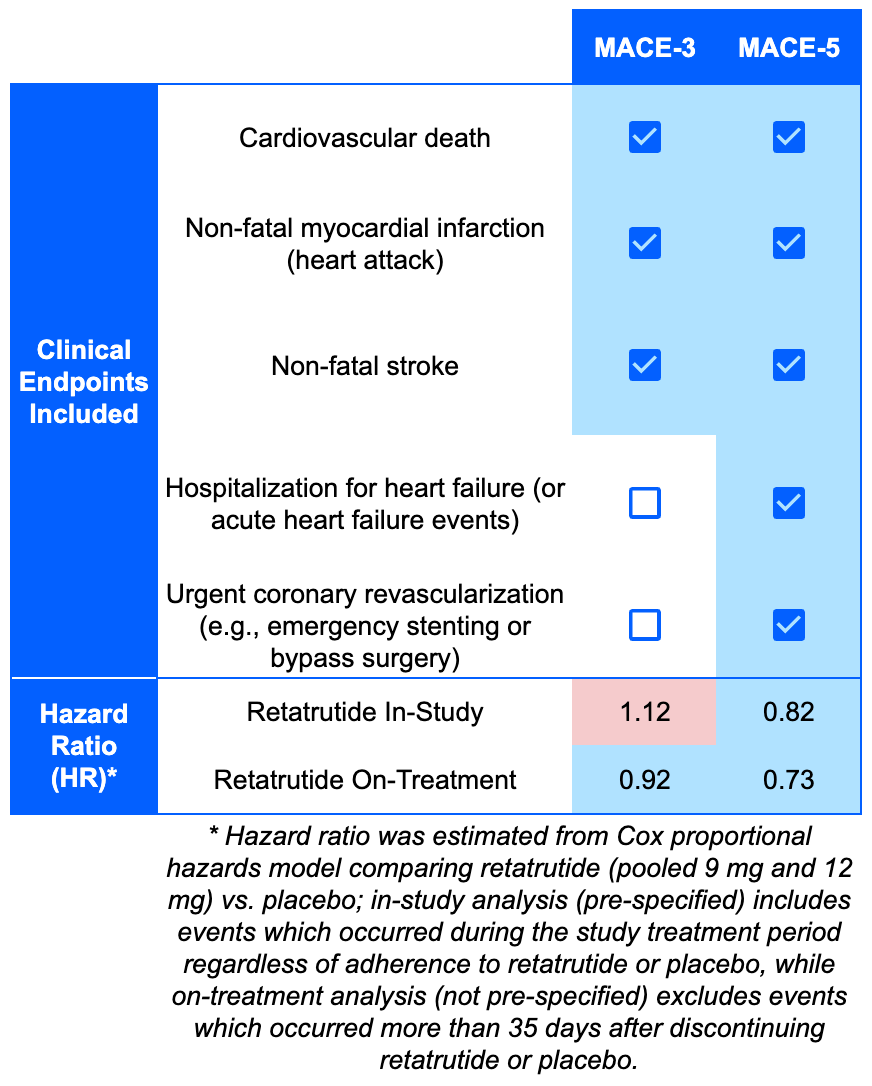
The Phase 3 TRIUMPH-2 (N = 1,152; obesity or overweight with Type 2 diabetes) and TRIUMPH-3 (N = 1,949; severe obesity with established cardiovascular disease) trials evaluated weekly subcutaneous retatrutide versus placebo over 80 weeks, assessing primary body weight changes alongside secondary glycemic control, safety, and composite cardiovascular outcomes (MACE-3 and MACE-5). Retatrutide met primary endpoints across both studies, with the 12 mg dose achieving unprecedented 18-month weight loss of -20.8% (and a 1.6 percentage point HbA1c reduction) in T2D patients and -22.6% in severe obesity, outperforming placebo while showing an 18% relative risk reduction in MACE-5 (HR = 0.82) despite low overall event counts yielding a non-significant numerical difference in MACE-3 (HR = 1.12). Retatrutide’s safety profile was typical of incretins, with predominantly mild-to-moderate GI adverse events and manageable discontinuation rates (3.8% to 13.5%). These findings solidify retatrutide as a novel potency benchmark capable of overcoming historical weight loss plateaus in hard-to-treat diabetic and severe obesity populations.
Eli Lilly plans to present complete datasets and detailed secondary endpoint breakdowns at upcoming medical meetings, including a full TRIUMPH-2 presentation at EASD 2026. Lilly is finalizing the Chemistry, Manufacturing, and Controls (CMC) package and plans to submit its Biologics License Application (BLA) to the U.S. FDA in 1Q 2027. The comprehensive registration package will support global filings across obesity, knee osteoarthritis pain, obstructive sleep apnea, and cardiometabolic diseases.
Sources: Eli Lilly press release
J&J - Talvey (GPRC5D x CD3 TCE) & Tecvayli (BCMA x CD3 TCE) / Phase 3 (r/r MM)
On July 23, 2026, J&J reported results for their Phase 3 MonumenTAL-6 trial, which evaluated a combination of T-cell engagers (TCEs) in 2nd-to-5th line relapsed/refractory multiple myeloma (RRMM).
Relapsed/refractory multiple myeloma (RRMM) is driven by malignant plasma cells that develop treatment resistance through clonal evolution and marrow microenvironment interactions, resulting in organ dysfunction like bone lesions, anemia, and renal failure. Management relies on anti-CD38 antibody-based triplets or quadruplets in early lines (1-3 prior therapies), whereas triple-class refractory disease shifts toward novel immunotherapies targeting BCMA or GPRC5D. To overcome single-antigen escape, the combination of Tecvayli (teclistamab; BCMA x CD3) and Talvey (talquetamab; GPRC5D x CD3) redirects cytotoxic T cells to simultaneously destroy malignant cells via two distinct targets. This dual-bispecific approach effectively mitigates antigen loss while sparing normal B-cell lineages, offering a potent, non-overlapping immunotherapeutic strategy to deliver durable remissions in refractory populations.
The Phase 3 MonumenTAL-6 trial evaluated Tecvayli + Talvey and Tecvayli + pomalidomide versus standard of care (SOC) in patients with relapsed/refractory multiple myeloma who had received 2 to 5 prior lines of therapy (including an IMiD, PI, and anti-CD38 antibody). Following an IDMC recommendation to unblind early at the first interim analysis due to overwhelming efficacy, the Tecvayli + Talvey combination demonstrated an 89% reduction in the risk of disease progression or death (HR=0.11) and a 62% reduction in the risk of death compared to SOC, with a safety profile consistent with its individual components and manageable rates of CRS, ICANS, and GPRC5D-related toxicities. By validating the simultaneous dual-targeting of BCMA and GPRC5D without cytotoxic chemotherapy backbones, these findings establish a potential shift toward chemotherapy-free, dual-immunotherapy combinations in earlier relapse settings to overcome antigen loss and driver resistance.
J&J plans to present complete dataset presentations at upcoming medical congresses and submit supplemental Biologics License Applications (sBLAs) to the U.S. FDA and European Medicines Agency (EMA) to move both agents into earlier 2L+ indications. They hope to establish outpatient/step-up dosing administration protocols to enable community oncologists to safely manage potential CRS and neurological events. These results also bode well for J&J’s follow-on multi-targeting agent JNJ-5322, a BCMA x GPRC5D x CD3 TCE.
Sources: J&J press release
Arrowhead - Plozasiran (APOC3 RNAi) / Phase 3 (sHTG)
On July 22, 2026, Arrowhead Pharmaceuticals announced positive top-line results from two pivotal Phase 3 trials, SHASTA-3 and SHASTA-4, evaluating its investigational RNAi therapeutic plozasiran in adults with severe hypertriglyceridemia (sHTG). Note that plozasiran is currently approved for familial chylomicronemia syndrome (FCS) under the brand name Redemplo, but not for sHTG at the time of this article’s publication.
Severe hypertriglyceridemia (sHTG; fasting triglycerides ≥500 mg/dL) stems from the accumulation of triglyceride-rich lipoproteins due to impaired clearance or excessive hepatic secretion, creating cytotoxic free fatty acids that elevate plasma viscosity and trigger life-threatening acute pancreatitis (AP). While standard management relies on strict dietary fat restriction alongside first-line fibrates or high-dose prescription omega-3 fatty acids, genetic or refractory defects often necessitate targeted interventions like plozasiran. Utilizing Arrowhead’s TRiM platform, plozasiran is an investigational subcutaneous siRNA that silences hepatocyte expression of APOC3, a key inhibitor of lipoprotein lipase and hepatic lipid clearance. This approach aims to deliver potent, prolonged triglyceride lowering and pancreatitis risk reduction through a convenient once-quarterly dosing regimen.
The twin Phase 3 SHASTA-3 and SHASTA-4 trials evaluated quarterly subcutaneous plozasiran (25 mg) versus placebo in adults with severe hypertriglyceridemia (TG≥500 mg/dL). Both studies met their primary endpoint with median fasting triglyceride reductions of -79% and -81% at 12 months, outpacing historical 6-month benchmarks set by antisense options like Tryngolza (olezarsen, -68-73%; we covered their sHTG approval here) on a cross-trial basis and demonstrating a favorable safety profile comparable to placebo. Direct head-to-head comparisons against olezarsen have not been conducted in clinical trials. Crucially, a pre-planned pooled analysis showed a 78% reduction in cumulative acute pancreatitis events (100% in high-risk patients with prior pancreatitis), directly validating that APOC3 silencing resolves the disease’s primary life-threatening clinical sequela. With convenient once-quarterly administration and robust clinical event reduction, plozasiran establishes a potential best-in-class RNAi profile in sHTG that advances management beyond surrogate lipid biomarker lowering.
Arrowhead plans to present full Phase 3 data and subgroup analyses at the European Society of Cardiology (ESC) Congress on August 30, 2026 and submit a supplemental New Drug Application (sNDA) to the U.S. FDA before the end of 2026, alongside planned regulatory submissions in Europe and other international markets. Continuing clinical progression in related cardiometabolic indications, including familial chylomicronemia syndrome (FCS; where plozasiran is already FDA-approved) and broader mixed dyslipidemia settings.
Sources: Arrowhead press release
Love biotech? Check out Biotech Readout’s full content library, or navigate directly to a segment that interests you:
Frontiers in Medicine: Exploring the frontiers of our understanding and treatments for disease.
Medical History: Recovering forgotten relics in the history of medicine.
Acquisitions: Exploring the innovation behind acquired companies.
Weekly Readout: A digest of new clinical data from the past week.

To contact us, please send us an email at biotechreadout@gmail.com
Disclaimers
Investigational Status Disclaimer
The therapeutic candidates discussed in this newsletter are currently in clinical development and have not been approved for commercial sale by the U.S. Food and Drug Administration (FDA), the European Medicines Agency (EMA), or other global regulatory authorities. Their safety and efficacy have not been established. References to pipeline products and ongoing clinical trials involve significant risks and uncertainties. Statements regarding the potential safety, potency, or efficacy of investigational drugs reflect current hypotheses and are not a guarantee of future performance or regulatory clearance. The outcome of clinical trials is inherently unpredictable, and clinical results from earlier stages may not be predictive of results in later, larger-scale trials.
No Medical Advice Disclaimer
This newsletter is for informational and educational purposes only. The content is not intended to be a substitute for professional medical advice, diagnosis, or treatment. Always seek the advice of your physician or another qualified health provider with any questions you may have regarding a medical condition. Never disregard professional medical advice or delay in seeking it because of something you have read in this publication.
No Patient-Provider Relationship Disclaimer
The information provided in this newsletter is for educational and analytical purposes only. Receipt of this information, or any interaction with this content, does not create a physician-patient, pharmacist-patient, or any other professional-provider relationship between you and the authors or publishers. This newsletter should not be used as a substitute for a personal consultation with a qualified healthcare professional.
Forward-Looking Statements Disclaimer
This newsletter contains “forward-looking statements” regarding future events, including clinical trial timing, regulatory milestones, and projected market performance. These statements are based on current expectations and assumptions that are subject to significant risks and uncertainties. Actual results may differ materially from those expressed or implied. We undertake no obligation to update these statements as a result of new information or future developments.
Third-Party Links & Content Disclaimer
This newsletter contains links to third-party websites, including clinical trial registries and corporate presentations. Biotech Readout does not endorse, guarantee, or assume responsibility for the accuracy or reliability of any information offered by third-party providers.
Errors and Omissions Disclaimer
While we strive for technical accuracy, the information in this newsletter is provided on an “as is” basis with no guarantees of completeness, accuracy, or timeliness. Biotech Readout assumes no liability for any errors or omissions in the content of this publication.
Non-Endorsement Disclaimer
Any reference to specific commercial products, processes, or services by trade name, trademark, or manufacturer does not constitute or imply an endorsement or recommendation by the author. All trademarks are the property of their respective owners.
No Investment Advice Disclaimer
This newsletter is for informational purposes only and does not constitute financial, investment, or legal advice. The author is not a registered investment advisor. You should consult with a professional financial advisor before making any investment decisions. The biotechnology sector is highly volatile; past performance is not indicative of future results.
Conflict of Interest Disclaimer
The author of this newsletter maintains a position of independence. At the time of publication, the author holds no direct financial interest, equity, or options in any of the companies mentioned in this report. No compensation has been received from any third party to feature or analyze specific therapeutic candidates or corporate entities.