
Biotechs post wins in menopause hot flashes, anxiety disorder, polycythemia vera, and more
Weekly Readout #18: Week ending August 14, 2026

Disclaimer: This newsletter is for educational and informational purposes only and does not constitute medical, investment, or financial advice, nor does it establish a provider-patient relationship. Content may include forward-looking statements and discussions of investigational therapeutic candidates that are not FDA/EMA approved; their safety and efficacy remain unestablished and clinical outcomes are unpredictable. While we strive for accuracy, all information is provided as is without guarantees. As of the date of publication, the author holds no direct equity positions in the specific companies mentioned in this issue nor receives third-party compensation for this coverage. Please find a complete version of our disclaimers at the bottom of this article and on our About page.

Press ⬇️ to go down to a section and ⬆️ to go back up to the Table of Contents
Table of Contents
This week, we discuss:
China Biotech
Acquisitions ⬇️
Jazz to Acquire Actio
AstraZeneca-BMS Merger Cancelled
Clinical Trial Data
China Biotech
Wondering why we discuss China Biotech every week? Tap here to learn more.
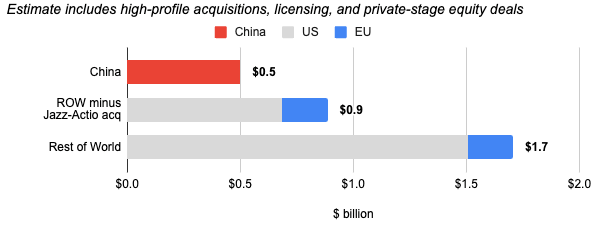
Financing Activity for China versus Rest of World
for the week ending August 14, 2026
Senate Bill Tightens Scrutiny of China Biotech Investment
On August 7, 2026, Senators Elissa Slotkin (D-MI) and Pete Ricketts (R-NE) introduced the Biotech Investment National Security Act (BINSA) in the Senate. The bill mirrors a bipartisan House proposal originally written by Representatives John Moolenaar (R-MI) and Debbie Dingell (D-MI). BINSA aims to amend the COINS Act to require the Treasury Department to screen outbound investments into biotechnology within “countries of concern,” specifically targeting China. The legislation instructs the Treasury to pay specific attention to joint ventures, equity investments, and licensing deals involving Chinese companies. It is currently awaiting consideration by the House Committee on Financial Services. This comes after a previous attempt by Rep. Moolenaar to attach the bill to the annual defense spending bill failed to advance. The Senate introduction applies pressure on the Treasury Department as it drafts regulations on outbound investment screening rules.
The bill has sparked significant division and lobbying efforts within the pharma and biotech sectors. Critics argue that strict restrictions could harm innovation rather than strengthen the U.S. sector. John Stanford, Executive Director of the VC trade group Incubate, pushed back against the measure, stating that “we cannot restrict our way to leadership” and emphasizing that the U.S. does not need to compromise innovation for national security.
Sources: Endpoints article
Acquisitions


Clinical Trial Data
AbCellera - ABCL635 (anti-NK3R mAb) / Phase 2 (menopause hot flashes)
AbCellera released top-line Phase 2 data for ABCL635, an investigational monoclonal antibody (mAb) targeting the neurokinin 3 receptor (NK3R) for moderate-to-severe vasomotor symptoms (VMS; commonly known as “hot flashes”) associated with menopause.
Vasomotor symptoms (VMS), or hot flashes, are caused by menopausal estrogen decline triggering hyperactive neurokinin B (NKB) signaling on hypothalamic KNDy neurons, which disrupts thermoregulation and causes sudden heat-dissipation responses. While hormone therapy remains the traditional standard of care, it is contraindicated in many women due to cardiovascular and cancer risks, leading to non-hormonal alternatives like off-label CNS drugs and oral NK3R antagonists. ABCL635 directly addresses this pathway as a monoclonal antibody that selectively blocks NK3R to restore thermal stability. Unlike daily oral NK3R inhibitors, its ~24-day half-life offers a highly convenient, long-acting subcutaneous dosing option (monthly or less frequent) for patients seeking non-hormonal relief.
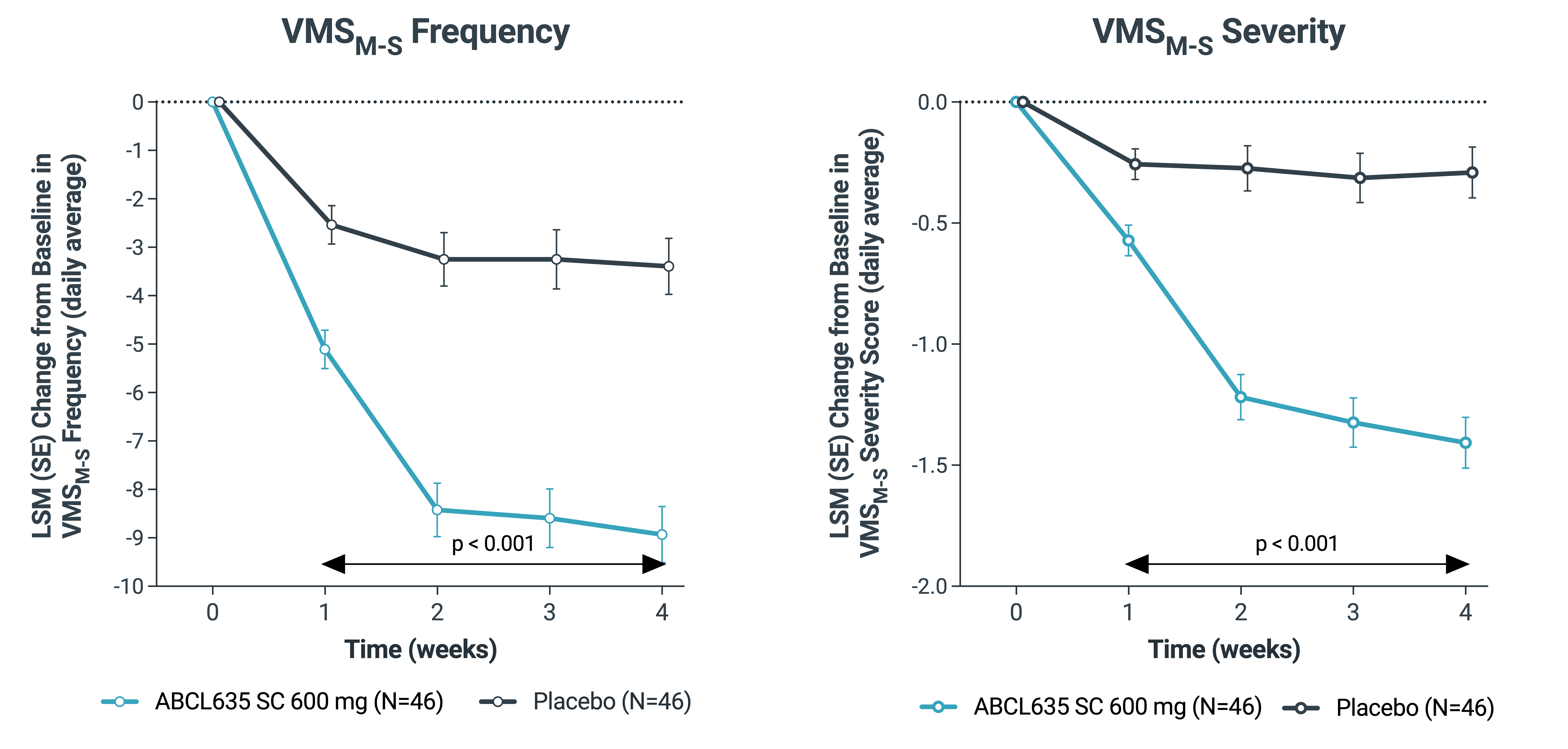
In a Phase 1/2 placebo-controlled trial of 92 postmenopausal women, a single 600 mg subcutaneous injection of ABCL635 demonstrated potentially best-in-class efficacy for moderate-to-severe hot flashes, driving an 83% reduction in daily event frequency (-8.8 events/day) and a 58% drop in severity at four weeks. This yielded a statistically significant, placebo-adjusted net frequency reduction of 5.3 episodes per day (-50% relative net improvement, p < 0.001), roughly doubling the historical placebo-adjusted benchmark (~2.5 to 3.0 episodes/day) set by oral competitors like Astellas’s Veozah and Bayer’s Lynkuet on a cross-trial basis. Beyond superior efficacy and convenient monthly or quarterly dosing, ABCL635 showed a clean safety profile with no serious adverse events, discontinuations, or liver enzyme (ALT/AST) elevations. This reduces the risk of black-box liver toxicity warnings and blood-monitoring burdens associated with oral NK3R small molecules while validating AbCellera’s proprietary GPCR antibody discovery platform.
AbCellera plans to advance ABCL635 to pivotal Phase 3 trials to confirm durability beyond 4 weeks (standard regulatory endpoints require 12-week primary efficacy endpoints and 52-week safety follow-up). They aim to further establish multi-dose maintenance schedules (e.g., monthly vs. Q8W or Q12W dosing) and evaluate subcutaneous autoinjector formulations.
Sources: AbCellera press release, AbCellera slide deck
Silence - Divesiran (TMPRSS6 RNAi) / Phase 2 (polycythemia vera)
Silence Therapeutics announced positive topline results from its Phase 2 SANRECO trial evaluating divesiran (formerly SLN124), an investigational siRNA (TMPRSS6 RNAi), in phlebotomy-dependent patients with polycythemia vera (PV). The trial met its primary endpoint with high statistical significance, demonstrating durable hematocrit control, a dramatic reduction in phlebotomy burden, and a clear path toward Phase 3 development.
Polycythemia vera (PV) is a chronic myeloproliferative neoplasm driven by JAK2 mutations that cause hyperactive, erythropoietin-independent red blood cell overproduction, increasing blood viscosity, thrombotic risk, and systemic symptoms. While current standard of care relies on therapeutic phlebotomy alongside cytoreductive therapies (such as hydroxyurea, interferons, or ruxolitinib) to keep hematocrit below 45%, these approaches require frequent blood draws and can induce severe iron deficiency. Divesiran addresses this by using small interfering RNA (siRNA) to silence liver-expressed TMPRSS6, which upregulates hepcidin (the body’s master iron regulator) to restrict iron delivery to the bone marrow and selectively suppress red cell production. By targeting this iron-restriction pathway at the genetic level, divesiran controls hematocrit without invasive phlebotomy and, unlike daily or weekly alternatives, offers a long-acting profile that enables infrequent quarterly subcutaneous dosing.
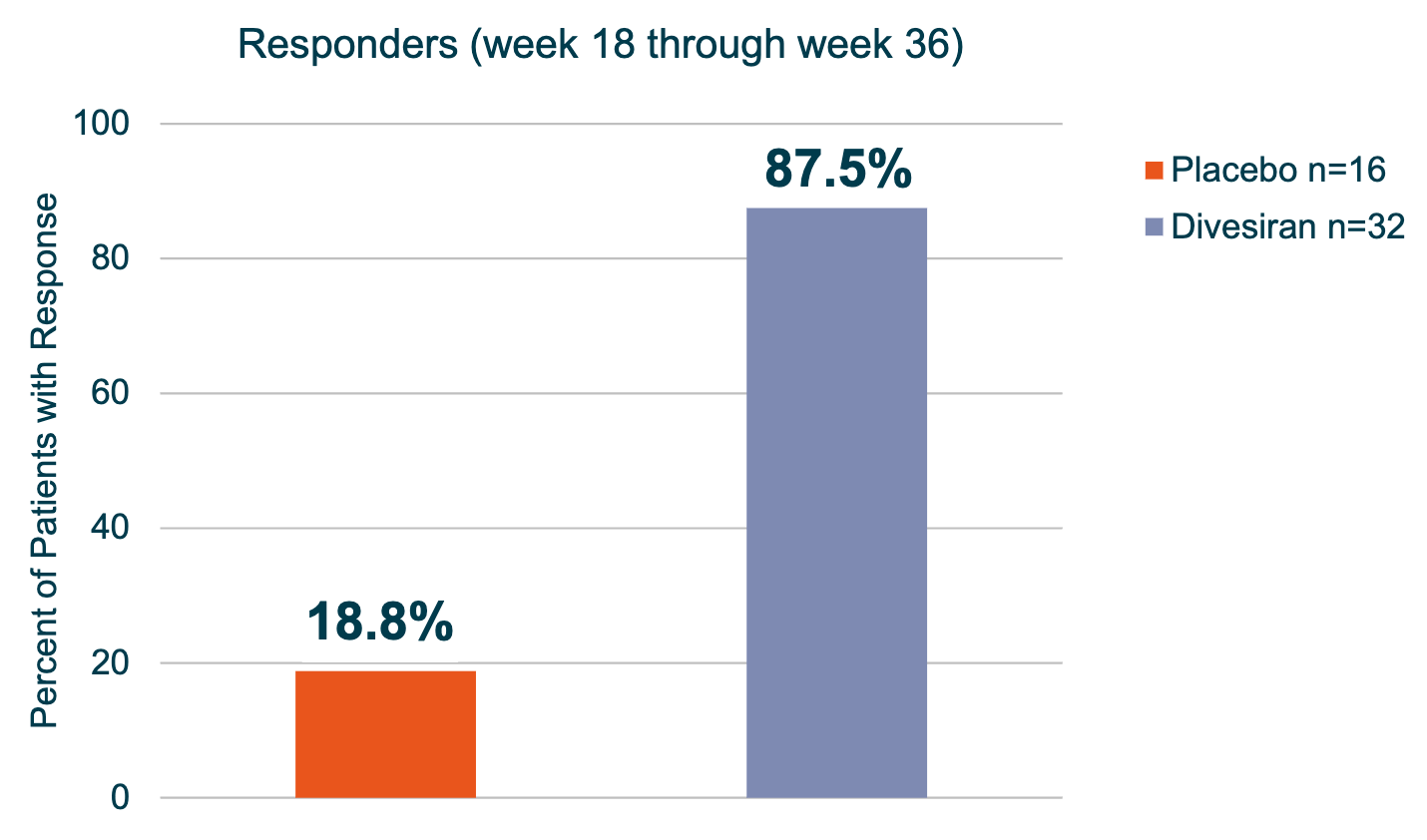
In the Phase 2 SANRECO trial of 48 phlebotomy-dependent polycythemia vera patients on background standard of care, divesiran met its primary endpoint with an 88% pooled response rate versus 19% for placebo (p < 0.0001), dramatically reducing mean phlebotomies to 0.2 over 36 weeks compared to 2.1 for placebo. Treatment was well tolerated with mostly mild-to-moderate adverse events and no new safety signals. Importantly, divesiran’s 88% overall response rate (and 81.3% response on a quarterly schedule) outperforms the 76.9% response rate reported for Protagonist/Takeda’s weekly rusfertide in its Phase 3 VERIFY trial on a cross-trial basis, establishing potential best-in-class efficacy. By delivering consistent hematocrit control and iron stabilization with once-every-three-months (Q12W) subcutaneous dosing, divesiran significantly reduces patient treatment burden compared to weekly injections while helping prevent chronic iron deficiency.
All trial participants from the Phase 2 trial have entered a 3-year extension period to monitor long-term safety and durability. Full results from the SANRECO Phase 2 trial have been submitted for presentation at an upcoming medical conference. Silence plans to hold an end-of-Phase 2 meeting with the FDA before year-end to finalize pivotal trial design. They also plan to initiate a pivotal Phase 3 trial in the first half of 2027 (1H 2027), evaluating the Q12W (once every 3 months) dosing regimen versus placebo.
Sources: Silence press release, Silence slide deck
Definium - DT120 (LSD ODT) / Phase 3 (anxiety disorder)
Definium Therapeutics announced positive topline results from its pivotal Phase 3 Voyage trial evaluating DT120 (lysergide D-tartrate / LSD in an orally disintegrating tablet [ODT] formulation) in adults with moderate-to-severe generalized anxiety disorder (GAD). The trial met its primary endpoint and all key secondary endpoints with high statistical significance, demonstrating rapid, durable, and clinically meaningful anxiety reduction from a single dose.
Generalized anxiety disorder (GAD) is characterized by persistent, excessive worry and somatic symptoms driven by dysregulation in prefrontal-limbic circuits and neurotransmitter imbalances (GABA, serotonin, norepinephrine). While standard care relies on psychotherapy alongside SSRIs/SNRIs or second-line agents like benzodiazepines and buspirone, traditional oral drugs often take weeks to demonstrate efficacy and carry adverse effects like sedation, weight gain, or dependence. Definium’s DT120 addresses these limitations as a fast-dissolve orally disintegrating tablet (ODT) of lysergide (LSD), acting as a serotonin 2A (5-HT2A) receptor partial agonist and monoaminergic modulator. By promoting rapid neuroplasticity and synaptogenesis to reset hyper-rigid neural networks within the default mode network and limbic system, DT120 provides a standalone pharmaceutical mechanism designed to deliver rapid, durable anxiety relief from a single dose without requiring co-administered psychotherapy.
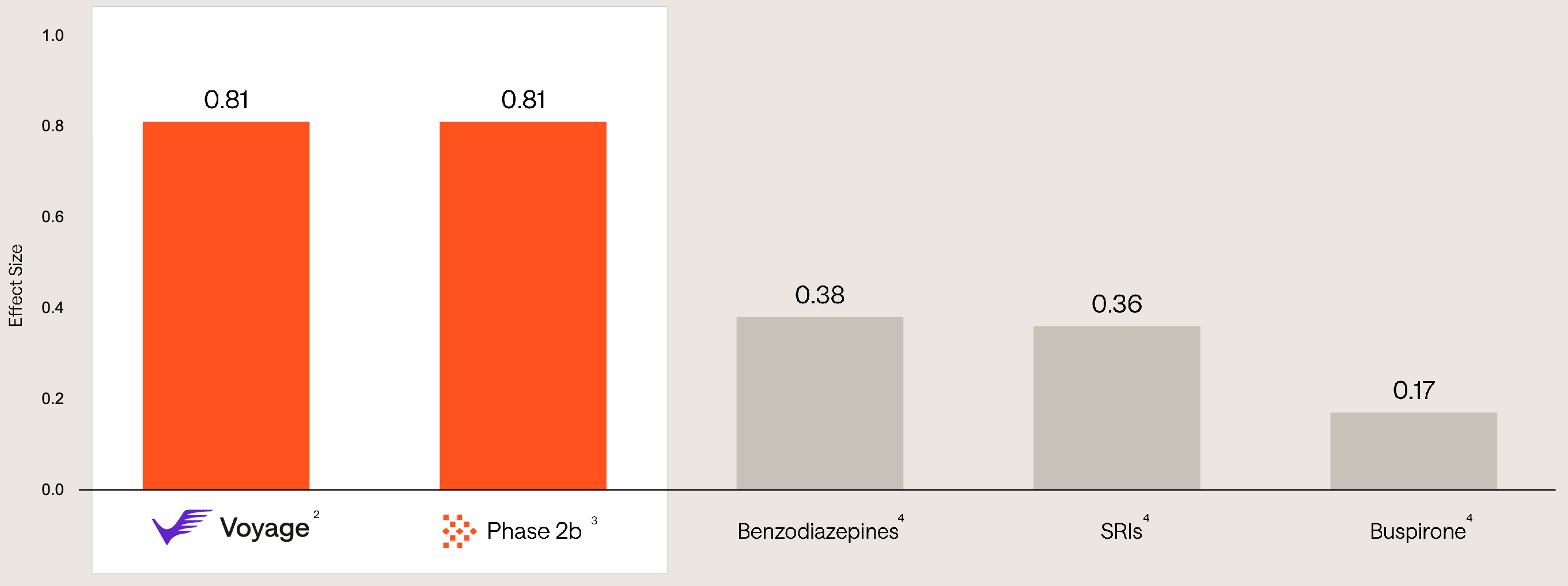
In the Phase 3 Voyage trial evaluating 214 adults with moderate-to-severe generalized anxiety disorder (GAD), a single oral dose of DT120 demonstrated rapid, statistically significant, and durable efficacy, achieving an 11.6-point reduction on the Hamilton Anxiety Rating Scale (HAM-A) at Week 12 compared to 6.2 points for placebo (a net 5.4-point placebo-adjusted improvement, p < 0.0001, Cohen’s d = 0.81). Statistically significant anxiety relief emerged by Day 2 and persisted through 12 weeks, driving superior clinical response rates (43% vs. 16%), full clinical remission (14% vs. 4%, p < 0.001), and early improvements on the CGI-S scale (-0.8 points at Day 2, -0.6 points at Week 12). DT120 was well tolerated with mostly mild-to-moderate, transient adverse events clustered on dosing day, no serious adverse events or suicidality signals, and an average in-clinic monitoring duration of 6.4 hours (with 92% meeting discharge criteria within 8 hours). As the second positive Phase 3 readout for DT120 following its successful major depressive disorder (MDD) trial, these preliminary Phase 3 findings suggest a potential alternative mechanism in GAD care, offering rapid single-dose relief that warrants further Phase 3 confirmation.
Definium plans to complete Panorama, its second pivotal Phase 3 study in GAD. Upon completion, the company plans to file a comprehensive New Drug Application (NDA) with the US FDA covering both GAD and MDD indications. Lastly, Definium aims to finalize health economics outcomes research (HEOR), physician training, and site readiness for single-day in-clinic administration models.
Sources: Definium press release, Definium slide deck
Descriptive data releases without numerical data
Cullinan - Zipalertinib (irreversible EGFR inhibitor) / Phase 3 (EGFR mutated NSCLC): Zipalertinib (CLN-081/TAS6417) is an oral, irreversible tyrosine kinase inhibitor specifically designed to target epidermal growth factor receptor (EGFR) exon 20 insertion mutations in non-small cell lung cancer (NSCLC). In a planned interim analysis of the randomized, global Phase 3 REZILIENT3 trial evaluating 285 treatment-naive adults with locally advanced or metastatic EGFR exon 20 insertion–mutated NSCLC, zipalertinib combined with platinum-based chemotherapy met its primary endpoint of progression-free survival (PFS), demonstrating a statistically significant and clinically meaningful improvement compared to chemotherapy alone alongside a manageable safety profile. These positive findings validated the combination as a potential first-line treatment option for a genetically defined NSCLC subgroup with high unmet medical need, prompting an Independent Data Monitoring Committee recommendation to unblind the study for continued follow-up. Cullinan Therapeutics and co-development partner Taiho Oncology plan to submit full dataset results for presentation at a future international medical conference while engaging with the FDA to pursue regulatory approval for the combination regimen. Sources: Cullinan press release
Love biotech? Check out Biotech Readout’s full content library, or navigate directly to a segment that interests you:
Frontiers in Medicine: Exploring the frontiers of our understanding and treatments for disease.
Medical History: Recovering forgotten relics in the history of medicine.
Acquisitions: Exploring the innovation behind acquired companies.
Weekly Readout: A digest of new clinical data from the past week.

To contact us, please send us an email at biotechreadout@gmail.com
Disclaimers
Investigational Status Disclaimer
The therapeutic candidates discussed in this newsletter are currently in clinical development and have not been approved for commercial sale by the U.S. Food and Drug Administration (FDA), the European Medicines Agency (EMA), or other global regulatory authorities. Their safety and efficacy have not been established. References to pipeline products and ongoing clinical trials involve significant risks and uncertainties. Statements regarding the potential safety, potency, or efficacy of investigational drugs reflect current hypotheses and are not a guarantee of future performance or regulatory clearance. The outcome of clinical trials is inherently unpredictable, and clinical results from earlier stages may not be predictive of results in later, larger-scale trials.
No Medical Advice Disclaimer
This newsletter is for informational and educational purposes only. The content is not intended to be a substitute for professional medical advice, diagnosis, or treatment. Always seek the advice of your physician or another qualified health provider with any questions you may have regarding a medical condition. Never disregard professional medical advice or delay in seeking it because of something you have read in this publication.
No Patient-Provider Relationship Disclaimer
The information provided in this newsletter is for educational and analytical purposes only. Receipt of this information, or any interaction with this content, does not create a physician-patient, pharmacist-patient, or any other professional-provider relationship between you and the authors or publishers. This newsletter should not be used as a substitute for a personal consultation with a qualified healthcare professional.
Forward-Looking Statements Disclaimer
This newsletter contains “forward-looking statements” regarding future events, including clinical trial timing, regulatory milestones, and projected market performance. These statements are based on current expectations and assumptions that are subject to significant risks and uncertainties. Actual results may differ materially from those expressed or implied. We undertake no obligation to update these statements as a result of new information or future developments.
Third-Party Links & Content Disclaimer
This newsletter contains links to third-party websites, including clinical trial registries and corporate presentations. Biotech Readout does not endorse, guarantee, or assume responsibility for the accuracy or reliability of any information offered by third-party providers.
Errors and Omissions Disclaimer
While we strive for technical accuracy, the information in this newsletter is provided on an “as is” basis with no guarantees of completeness, accuracy, or timeliness. Biotech Readout assumes no liability for any errors or omissions in the content of this publication.
Non-Endorsement Disclaimer
Any reference to specific commercial products, processes, or services by trade name, trademark, or manufacturer does not constitute or imply an endorsement or recommendation by the author. All trademarks are the property of their respective owners.
No Investment Advice Disclaimer
This newsletter is for informational purposes only and does not constitute financial, investment, or legal advice. The author is not a registered investment advisor. You should consult with a professional financial advisor before making any investment decisions. The biotechnology sector is highly volatile; past performance is not indicative of future results.
Conflict of Interest Disclaimer
The author of this newsletter maintains a position of independence. At the time of publication, the author holds no direct financial interest, equity, or options in any of the companies mentioned in this report. No compensation has been received from any third party to feature or analyze specific therapeutic candidates or corporate entities.