

Disclaimer: This newsletter is for educational and informational purposes only and does not constitute medical, investment, or financial advice, nor does it establish a provider-patient relationship. Content may include forward-looking statements and discussions of investigational therapeutic candidates that are not FDA/EMA approved; their safety and efficacy remain unestablished and clinical outcomes are unpredictable. While we strive for accuracy, all information is provided as is without guarantees. As of the date of publication, the author holds no direct equity positions in the specific companies mentioned in this issue nor receives third-party compensation for this coverage. Please find a complete version of our disclaimers linked here.

If you are a paid subscriber, go to this article’s premium charts & analysis here ⬇️
If you are a free reader or subscriber, enjoy the whole article free of charge and consider upgrading for premium charts & analysis on the antibody-drug conjugate (ADC) landscape (samples).
Introduction
On July 6, 2026, Novartis announced that it has entered into an agreement to acquire Myricx Bio for $1.1 billion upfront with up to $400 million in potential milestone payments, for a total deal value of up to $1.5 billion (Novartis press release, Myricx press release). This acquisition centers on a novel platform and three preclinical programs:
Antibody-drug conjugates (DCs) with N-myristoyltransferase inhibitor (NMTi) payloads
A preclinical NMTi-ADC targeting B7-H3
A preclinical NMTi-ADC targeting HER2
A preclinical NMTi-ADC targeting TROP2, which appears in an older Myricx press release
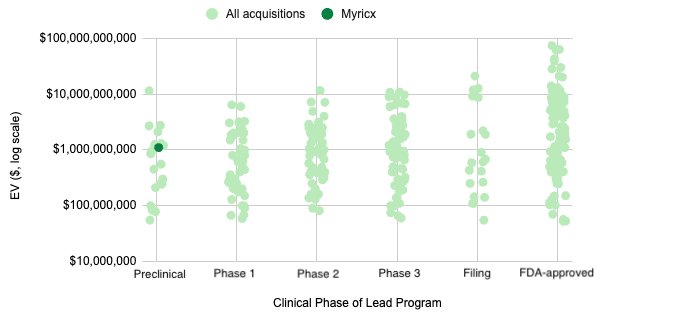
Right off the bat, it appears that Myricx was bought for a rather healthy premium, with the upfront payment being about 80% higher than the average preclinical-stage acquisition (see graph below).
In this article, we dive into the founding story of Myricx Bio, explore the strengths of their novel NMTi-ADC platform, and opine on why strategics have gotten excited about novel ADC payload companies.
From Malaria to MYC
The founding story of Myricx Bio is a prime example of how a decades-long academic research project has positioned itself to become a multi-billion dollar biotech success story.
The journey began more than 20 years ago in the laboratories of Imperial College London. Professor Ed Tate (now the GSK Chair in Chemical Biology) and his research group were trying to defeat malaria. Their target was N-myristoyltransferase (NMT), a vital protein-modifying enzyme that the malaria parasite relies on to survive. As the team engineered small molecules to block the parasite’s version of NMT, they hit upon a fascinating side effect. Some of the molecules they designed were incredibly potent against the human version of the enzyme. Professor Tate and his team realized that NMT is also a critical lifeline for human cells, and malignant cancer cells are uniquely addicted to it. Inhibiting NMT could cut off a tumor’s cellular machinery, forcing specific cancer cells to self-destruct. Remarkably, this mechanism showed immense promise in targeting MYC-driven cancers, an oncogene that had long been deemed difficult-to-drug.
Recognizing the massive therapeutic potential, Tate knew the science needed to leave the academic bench. Backed by critical, early-stage funding from Cancer Research UK, the team refined their molecules to identify drug-like candidates fit for human clinical trials. To transform this academic breakthrough into a commercial reality, Professor Tate partnered with two crucial co-founders:
Dr. Andrew Bell, a brilliant chemist with deep drug discovery expertise.
Dr. Roberto Solari, a seasoned biotech executive and Venture Partner at Brandon Capital.
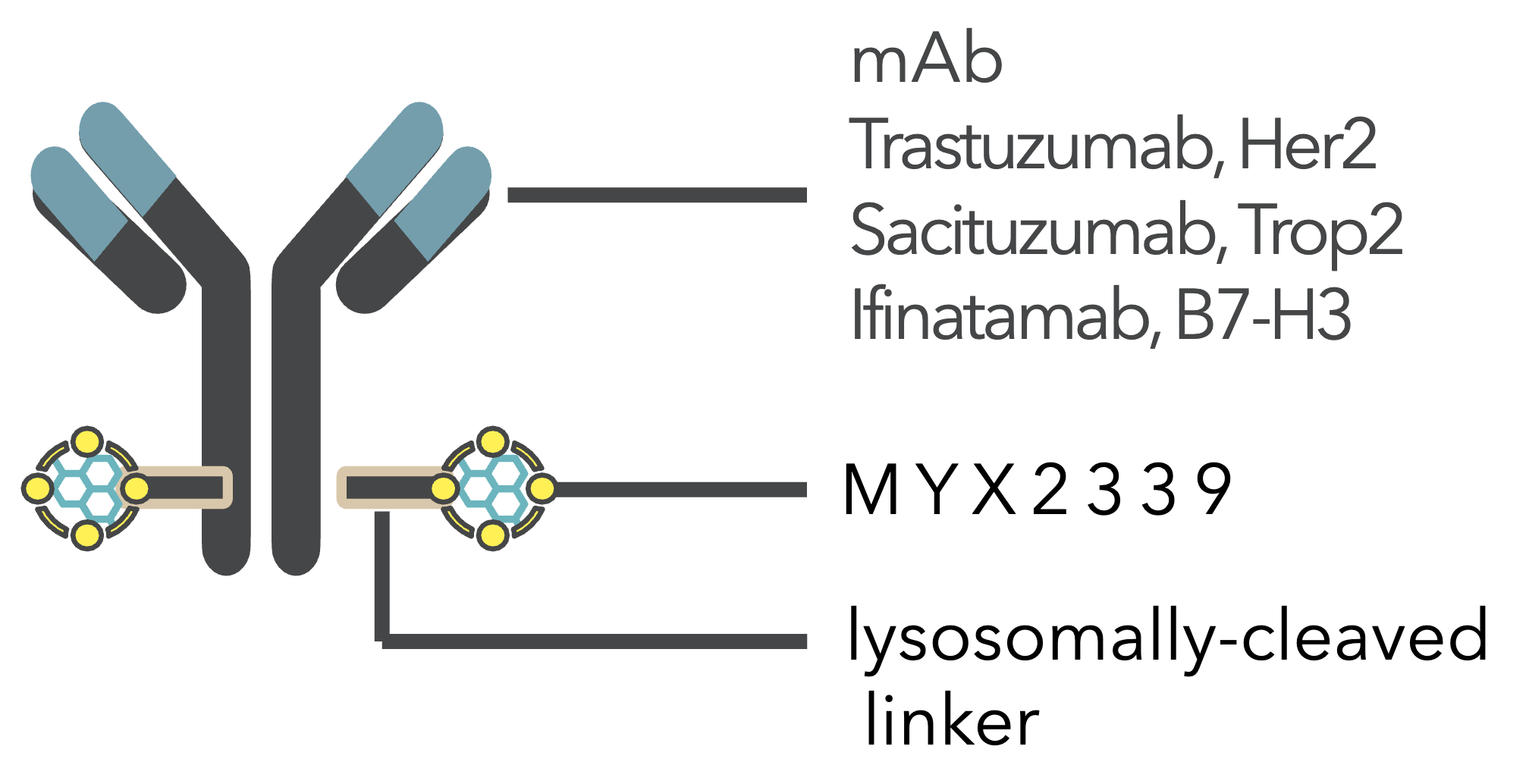
In 2019, the trio officially spun the company out from Imperial College London and the Francis Crick Institute under the initial name Myricx Pharma. Dr. Solari stepped in as the founding CEO, and the fledgling startup secured a £4.5 million Seed round co-led by Brandon Capital and Sofinnova Partners to kickstart their operations. While Myricx initially set out to develop traditional small-molecule oral drugs, the team faced a common biotech hurdle: ensuring the drug selectively killed cancer cells while minimizing harm to healthy tissue. In 2021, the company executed a brilliant strategic pivot. Instead of delivering the NMT inhibitors broadly across the body, they transitioned to evaluating them as payloads for Antibody-Drug Conjugates (ADCs). For those new to ADCs, they are a drug modality that acts like a biology guided missile. An antibody seeks out and binds to a specific protein on a cancer cell, and then drops a highly toxic payload (often a topoisomerase-1 or tubulin inhibitor) directly inside the tumor. Instead of traditional payloads, Myricx loaded their ADCs with their NMT inhibitor with the goal of making targeted therapeutics that sought out two targets:
B7-H3, which has been correlated in meta-analyses with a 71% lower overall survival (OS) and a 110% lower progression-free survival (PFS).
HER2, which is a well known breast cancer antigen going back to the 1998 approval of Herceptin (trastuzumab), the first monoclonal antibody approved for a solid tumor.
TROP2, which is upregulated in a vast array of aggressive epithelial malignancies
The pivot transformed Myricx from a niche spinout into a biotech heavyweight. Under the subsequent leadership of Dr. Robin Carr (first serving as Chief Development Officer starting in November 2019 and becoming CEO in August 2022 before settling on CTO in late 2025), the company raised a staggering £90 million ($114 million) Series A round in 2024, one of the largest ever achieved by a European academic spinout. The round attracted major global investors, including Novo Holdings, Eli Lilly, and Abingworth. By late 2025, biopharma veteran Mohit Rawat was brought on as CEO to steer the company toward global commercialization. Prior to joining Myricx, he served as President and Chief Business Officer at Fusion Pharmaceuticals, where he played a critical role in transforming the clinical-stage radiopharmaceutical company and secured a $2.4 billion acquisition by AstraZeneca in 2024.
Professor Tate’s 20-year scientific odyssey came to fruition in July 2026 when pharma giant Novartis announced a definitive agreement to acquire Myricx Bio for up to $1.5 billion ($1.1 billion upfront). What started as an accidental discovery in a British malaria lab, pivoted to cancer, and zeroed in on ADCs culminated in a significant early-stage exit.
Loading Up on Novel ADC Payloads
I realize that two points do not make a trend, but the rapid succession of +$1 billion novel ADC payload purchases has me seeing stars. Novartis’ buyout of Myricx Bio comes just one month after J&J’s $1 billion purchase of the preclinical ADC payload company Firefly Bio, which likewise commanded a healthy premium and was bought for its novel degrader antibody conjugate (DAC) platform. Furthermore, both are preclinical, suggesting that they have long-term strategic value (contrasts with Phase 3/Commerical stage companies that plug near-term revenue holes).

So, what is it about these novel ADC payloads that has piqued the interest of strategics? For years, the ADC boom relied heavily on two cytotoxic warheads: tubulin inhibitors (like MMAE) and topoisomerase I inhibitors (like DXd). While highly effective, these payloads suffer from narrow therapeutic windows, drug-resistance mutations, and systemic toxicities due to premature payload release in circulation. By acquiring Myricx and Firefly, pharma giants bypass traditional chemotherapies entirely, turning instead to differentiated mechanisms.
Firefly sits at the convergence of two powerhouse modalities: ADCs and Targeted Protein Degradation (TPD). Instead of slowly accumulating small-molecule toxins to kill a cell, a single degrader payload molecule works catalytically. It repeatedly hijacks the cell’s own ubiquitin-proteasome system to flag and destroy specific disease-driving proteins. Crucially, Firefly developed proprietary linker chemistry optimized to keep these complex degrader payloads stable in circulation, preventing the premature free payload release that plagues earlier-generation conjugates.
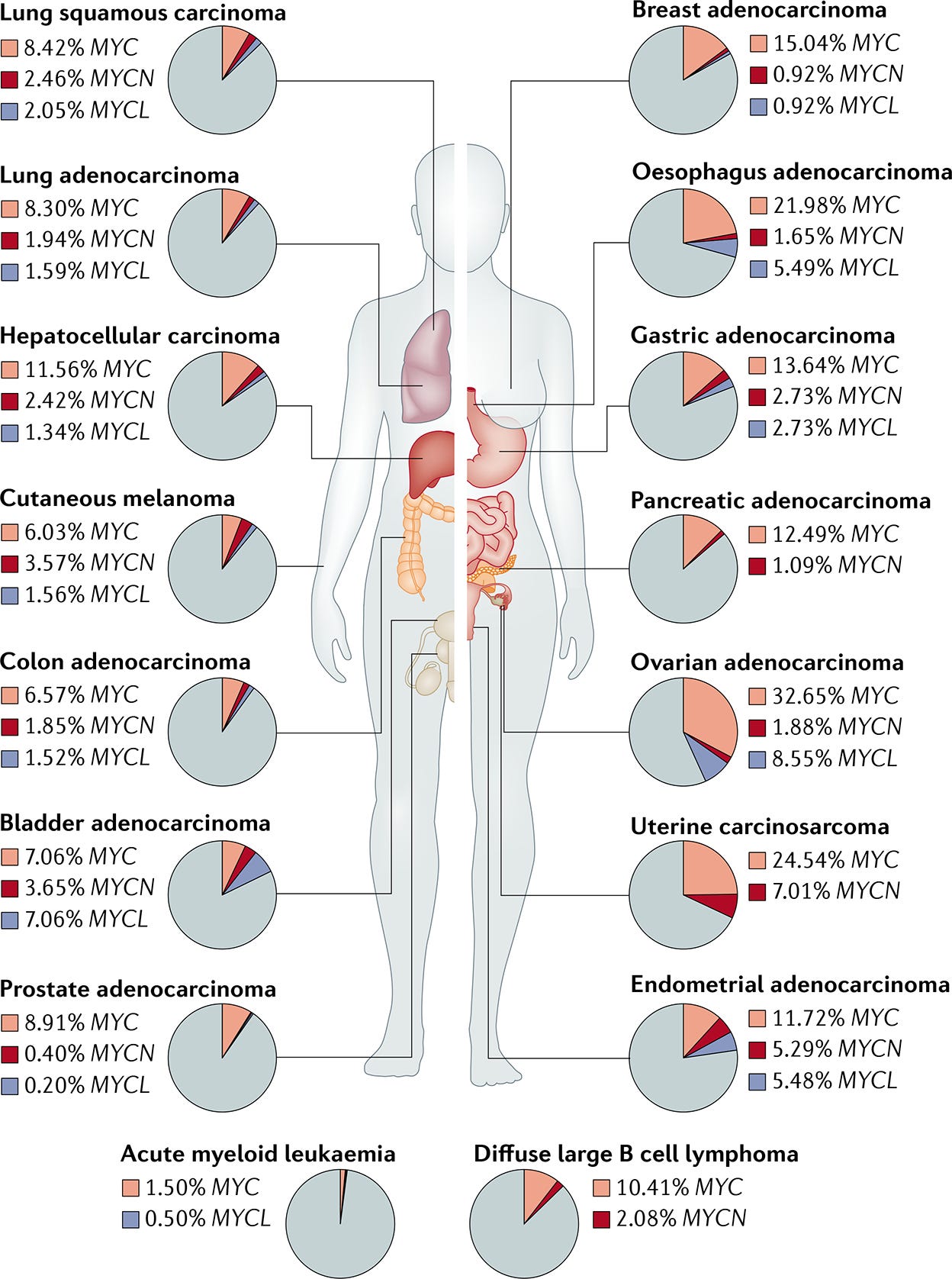
Myricx’s core innovation is shifting away from standard DNA/tubulin-damaging agents toward NMT inhibition. NMT is an enzyme responsible for protein myristoylation, a critical lipid modification that allows key signaling proteins to anchor to cellular membranes. Similar to Firefly, Myricx’s platform could offer an answer to tumors that have developed resistance to standard TOPO-1 or tubulin-targeting ADCs because NMT inhibition works via a completely distinct mechanism of action. However, there’s a different angle that makes NMT inhibitiors intriguing as a therapeutic class. Cancer cells, particularly those driven by the difficult-to-drug MYC oncogene, are uniquely addicted to NMT activity. Inhibiting it could cause a catastrophic collapse of intracellular signaling, triggering apoptosis. This is a big deal because the MYC proto-oncogene family is widely recognized as one of the most pervasive drivers of human tumorigenesis (see figure below). MYC is estimated to be deregulated or abnormally activated in approximately 50% to 70% of all human cancers. Even when the MYC gene itself is structurally normal, its protein product is overabundant, hyper-stable, and actively driving tumor hallmarks like metabolic reprogramming and immune evasion.
For over three decades, MYC has been difficult to drug because the protein lacks a deep ligand-binding pocket for small molecules to latch onto. Direct inhibitors have historically failed in clinical development because of the difficulty of finding a chemical binder, and because broad systemic inhibition could lead to catastrophic toxicities in normal proliferating tissues. An ADC bypassing the protein structure entirely and instead dropping a payload that exploits a MYC-addicted cellular pathway (like protein myristoylation via NMT) is hypothesized to provide a workaround. Preclinical models suggest that attaching it to an antibody may make the payload delivery more localized, which researchers hope will translate to mitigated systemic toxicity in clinical evaluation.
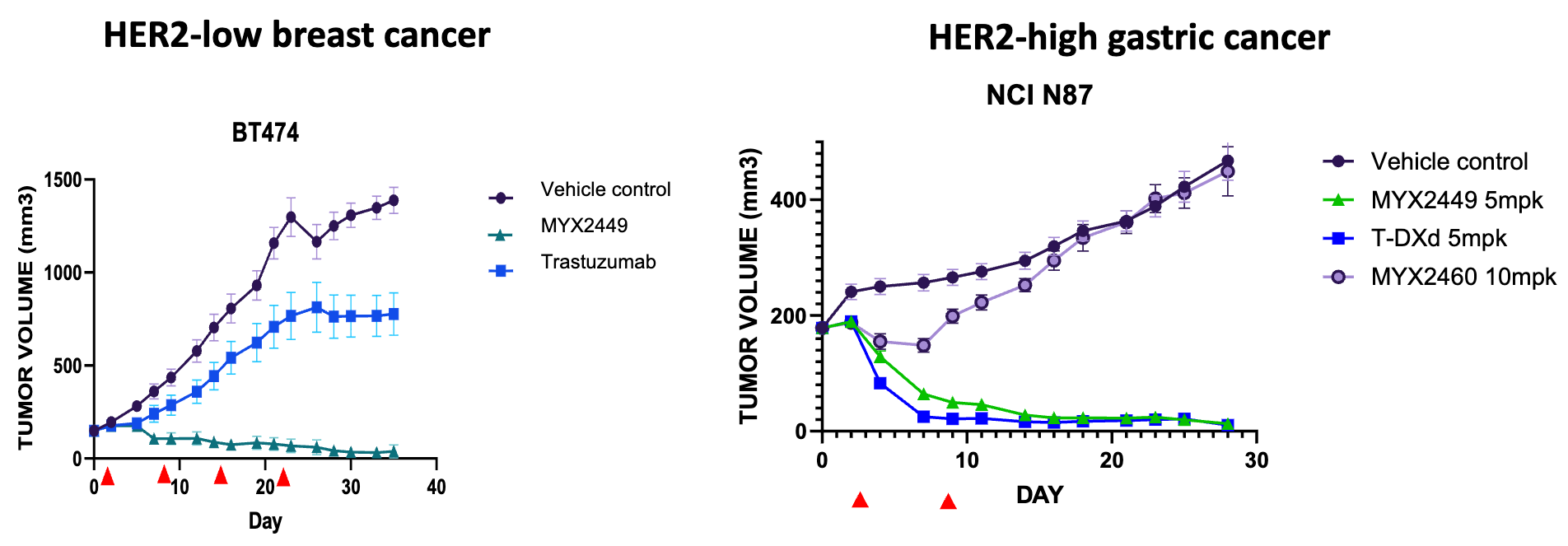
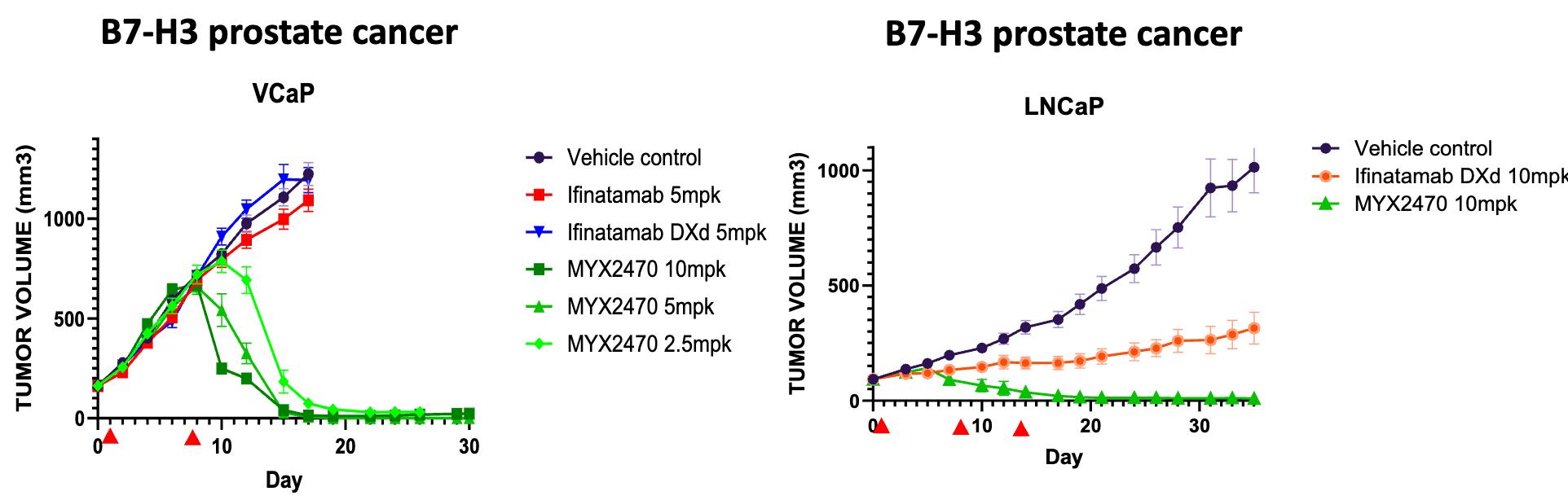
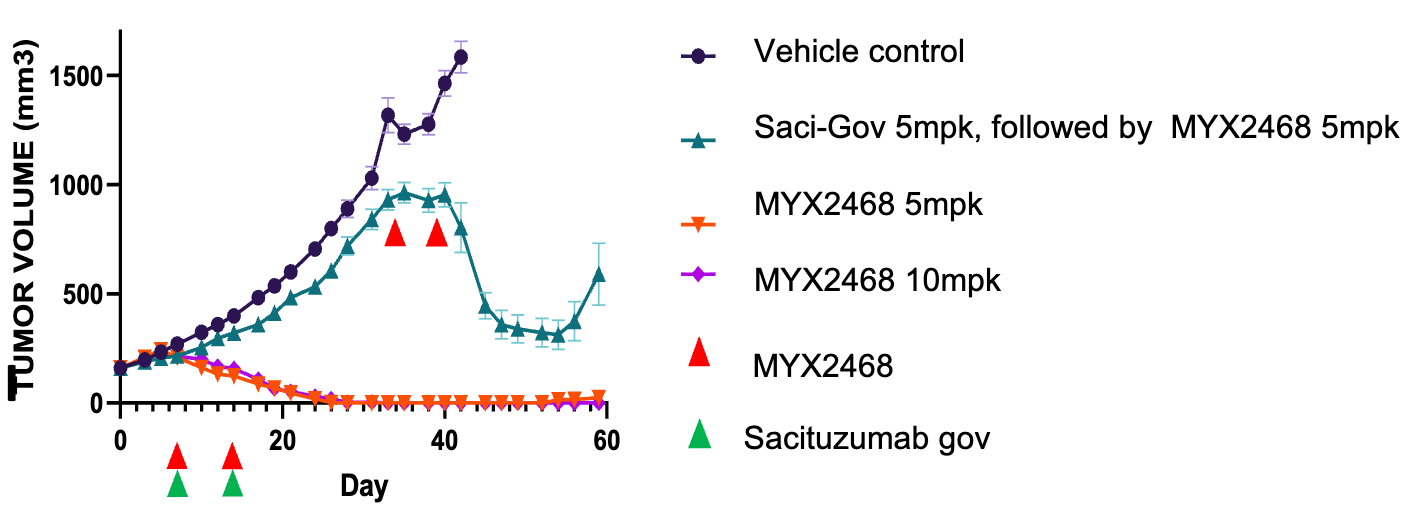
To evaluate their NMT inhibitor (NMTi) platform, Myricx engineered several proof-of-concept and lead assets by tethering their novel payloads to clinically validated monoclonal antibodies. These candidates achieved extensive tumor regression in various cancer cell lines (first & second figure below) and in an in vivo solid cancer xenograft model (third figure below) at doses that were generally well-tolerated in male cynomolgus monkeys.
Conclusion
The acquisition of Myricx Bio could be a sign of where the oncology market is heading. For the past few years, the ADC boom has been defined by a race to find the best surface targets, largely relying on a handful of standard, off-the-shelf chemotherapy payloads. Novartis’ ten-figure bet on Myricx (and J&J’s similar play for Firefly Bio) signals that the industry is moving past the low-hanging fruit. By shifting the focus to novel payloads, these next-generation platforms could unlock doors that have been closed to drug developers for decades. If Myricx’s platform can successfully show a workable therapeutic window in human clinical trials and pass regulatory muster, what began as a hunt for a malaria cure in a London university lab could very well redefine the standard of care in a wide variety of solid tumors.
Premium Charts & Analysis
All charts reflect data current as of the specified date and may not include every drug development program, although we aimed to capture the vast majority. Please feel free to email me at biotechreadout@gmail.com with “CHARTS” in the subject line to share suggestions or request chart updates.
Press ⬇️ to navigate to a section