
J&J to Acquire Firefly Bio
An ADC degrader play with a Nobel and rock & roll twist

Disclaimer: This newsletter is for educational and informational purposes only and does not constitute medical, investment, or financial advice, nor does it establish a provider-patient relationship. Content may include forward-looking statements and discussions of investigational therapeutic candidates that are not FDA/EMA approved; their safety and efficacy remain unestablished and clinical outcomes are unpredictable. While we strive for accuracy, all information is provided as is without guarantees. This newsletter is independent, and the author holds no financial positions in the companies mentioned nor receives third-party compensation for this coverage. Please find a complete version of our disclaimers at the bottom of this article and on our About page.

Introduction
On June 8, 2026, Johnson & Johnson (J&J) announced a definitive agreement to acquire Firefly Bio, Inc. for $1 billion in cash. This is not your average acquisition. Firefly is co-founded by Nobel laureate Carolyn Bertozzi, an American chemist widely recognized for founding the field of bioorthogonal chemistry.
Firefly’s foundational technology is the Firelink™ degrader antibody conjugate (DAC) platform, a new therapeutic class that combines the cellular targeting of traditional antibodies with the intracellular protein-cleaving power of degraders to treat solid tumors more effectively. Firefly’s lead program targets KRAS-driven cancers, which have historically been difficult to treat with conventional medicine.
Here, we dive into Carolyn Bertozzi’s rock & roll past and path to the Nobel Prize in Chemistry, as well as her collaboration with Versant-incubated startup Firefly Bio.
Rock You Like a Nobel Laureate
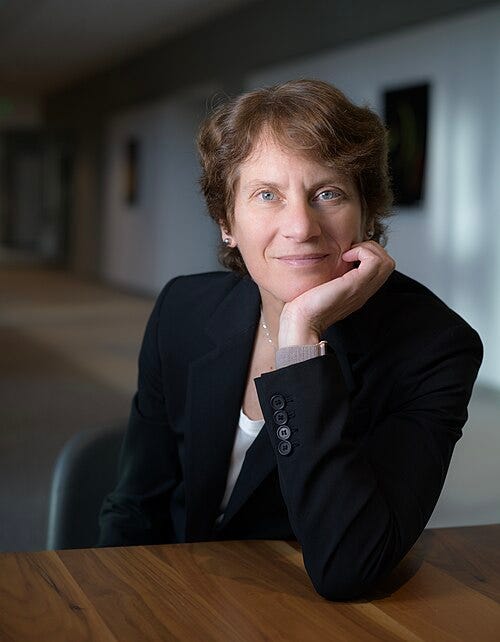
Growing up in Lexington, Massachusetts, science was practically the family business. Carolyn Bertozzi’s father, William Bertozzi, was a nuclear physics professor at MIT. The expectation in the household was clear: his daughters would go to MIT and pursue the hard sciences. Carolyn, however, possessed a fiercely independent streak, leaning heavily toward music. When she entered Harvard University in 1984, she genuinely considered majoring in it. The early 1980s were an explosive era for electronic synthesizers, keyboard production, and new wave rock, and Bertozzi leaned heavily into the campus music scene, joining several underground student bands.
Her most famous musical chapter opened when she crossed paths with Tom Morello, a fiercely political social studies undergraduate who happened to be a virtuosic, highly experimental guitarist. Together, they formed a satirical, high-energy rock group called Bored of Education. True to the mid-1980s, Morello frequently performed in tight spandex, delivering aggressive, heavy riffs. Bertozzi stood behind the electronic keyboards, anchoring the rhythm, synthesizing brass and bass lines, and shaping the band’s new wave/rock fusion sound. In 1986, during Morello’s senior year, Bored of Education entered and won the Ivy League Battle of the Bands, cementing them as the top student act across the entire conference.

Shortly after their big win, Morello graduated and moved to Los Angeles, where he would eventually form Rage Against the Machine and later Audioslave, transforming the landscape of modern rock with his politically charged, genre-bending guitar style. Bertozzi stayed at Harvard for two more years, where her focus began to shift decisively toward organic chemistry, though her love for late-night synthesizer jamming never quite left her.
So, what led Bertozzi to chemistry? Everything shifted during her sophomore year when she walked into an organic chemistry lecture. While many pre-med students viewed the subject as a brutal weed-out class, Bertozzi saw an intricate, logical, and breathtakingly beautiful puzzle. She changed her major and graduated summa cum laude in 1988. Determined to forge her own path, she moved west for graduate school at the University of California, Berkeley. It was here that she fell in love with glycans, the complex, forest-like structures of sugar chains that coat the surface of every living cell. Biologists knew these sugars were crucial for cellular communication, but because they were incredibly difficult to track, they were largely ignored. Bertozzi wanted to change that. After completing her Ph.D. at Berkeley and a postdoctoral fellowship at UCSF, Bertozzi joined the UC Berkeley faculty in 1996. She set her sights on a daunting goal: mapping glycans directly inside a living creature.
To do that, she needed a way to attach a glowing molecular tag to the sugars. The problem was the environment. Cells are highly sensitive, crowded, watery spaces packed with thousands of proteins, lipids, and nucleic acids. If you introduce an artificial chemical reaction into a cell, one of two things usually happens:
The cellular environment destroys or ignores the chemical.
The chemical destroys the cell.
Bertozzi realized she needed a reaction that was utterly invisible to the cell’s native biology. In 2003, she coined a new term for this concept: Bioorthogonal Chemistry, meaning chemistry that runs on a completely separate, non-intersecting axis to the chemistry of life. Around the same time, scientists Barry Sharpless and Morten Meldal had discovered click chemistry, a method where two molecular components could reliably snap together like a seatbelt buckle. It was a revolutionary concept, but it had a fatal flaw for biology: it required a copper catalyst. In living systems, copper is highly toxic, causing cells to wither and die.
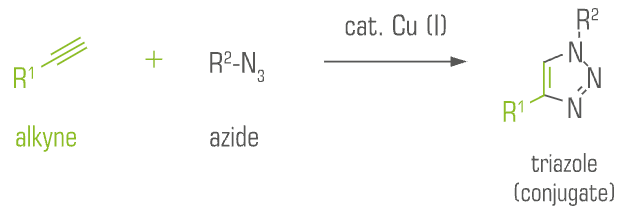
Bertozzi sought a workaround that eliminated the need for copper entirely. She found her answer by looking into the deep history of organic chemistry and weaponizing physical strain. She designed an eight-membered carbon ring called a cyclooctyne, forcing it into a severely bent, uncomfortable shape. This process came to be known as strain-promoted alkyne-azide cycloaddition (SPAAC). Since the molecule was packed with stored energy, like a tightly coiled spring, it was desperate to burst open. When it encountered a specific target molecule (an azide) embedded in a cell’s glycans, the spring released, and the two snapped together instantly. No toxic copper required. Using this “copper-free click chemistry,” Bertozzi did what many thought impossible: she successfully fed modified sugars to living cells, watched the cells mount them onto their surfaces, and then snapped glowing tags onto those sugars inside living zebrafish and mice. For the first time, scientists could watch the sugar coats of living, developing organisms change in real time.

In 2015, Bertozzi moved her laboratory to Stanford University, stepping into her current role as the Baker Family Director of Sarafan ChEM-H. Her focus expanded from simply looking at biology to fixing it. She realized that cancer cells use their thick coating of glycans as a sort of “invisibility cloak” to hide from the human immune system. Armed with bioorthogonal chemistry, she began building new biological therapeutics. Her lab co-founded multiple biotechnology companies to engineer molecules that act like lawnmowers, specifically shaving the deceptive sugars off cancer cells so the immune system can detect and destroy the tumor. Her entrepreneurial work also yielded breakthroughs like LYTACs (Lysosome-Targeting Chimeras), an entirely new therapeutic modality designed to drag disease-causing proteins out of the bloodstream and drop them into the cell’s garbage disposal (the lysosome) to be shredded.
On an October morning in 2022, Carolyn Bertozzi’s phone rang at 3:00 AM. It was the call from Stockholm. She had been awarded the 2022 Nobel Prize in Chemistry, sharing it with Sharpless and Meldal. At 56, she became one of only a handful of women in history to win the prestigious honor. Beyond the ultimate scientific validation, the award shone a spotlight on Bertozzi as a transformative figure in academic culture. Upon hearing the news, Bertozzi’s old bandmate Tom Morello immediately took to social media to celebrate his former keyboardist:

In a podcast with NobelPrize.org, Bertozzi reflected on how her musical background directly influenced her scientific creativity. She views both organic chemistry and music as structural languages driven by composition, creativity, and lateral thinking. To Bertozzi, designing a bioorthogonal chemical reaction inside a cell is not unlike writing a piece of music. You have to understand how different components (or notes) interact, ensure they don’t create destructive interference (or dissonance) with the background environment, and arrange them so they “snap” together in perfect harmony. The egalitarian, expressive nature of being in a band also heavily influenced her approach to leadership. Her laboratory at Stanford is famous for its vibrant, highly inclusive, and non-hierarchical culture. Rather than acting as a strict, top-down director, she operates more like a bandleader, bringing diverse talents together, encouraging improvisation, and letting every researcher take their own solo.Body
You Would Not Believe Your Eyes, If One Billion Fireflies, Lit Up the World as I Fell Asleep
In the high-stakes theater of modern biotechnology, certain ideas bubble just beneath the surface for years, waiting for the technology and the perfect team to catch up. Such was the case for Firefly Bio, a company born from a simple question: What happens when you marry the precise navigation of an antibody with the cellular destructive power of a protein degrader?
By 2022, the oncology landscape was being dominated by Antibody-Drug Conjugates (ADCs). These therapies worked like molecular smart missiles: an antibody navigated through the bloodstream, latched onto a cancer cell, and dropped a toxic chemical payload inside. But ADCs had a flaw. Their payloads were traditionally brutal chemical toxins. If the drug leaked into healthy tissue before reaching the tumor, it caused severe, dose-limiting side effects. Meanwhile, a parallel revolution was happening in protein degraders. Instead of poisoning a cell, these molecules hijacked the cell’s own disposal system to shred specific, disease-causing proteins. They were incredibly elegant and catalytic, but they lacked a targeting system so they couldn’t reliably find the tumor tissue on their own. The solution seemed obvious on paper: attach a protein degrader payload to an antibody, creating a Degrader-Antibody Conjugate (DAC).
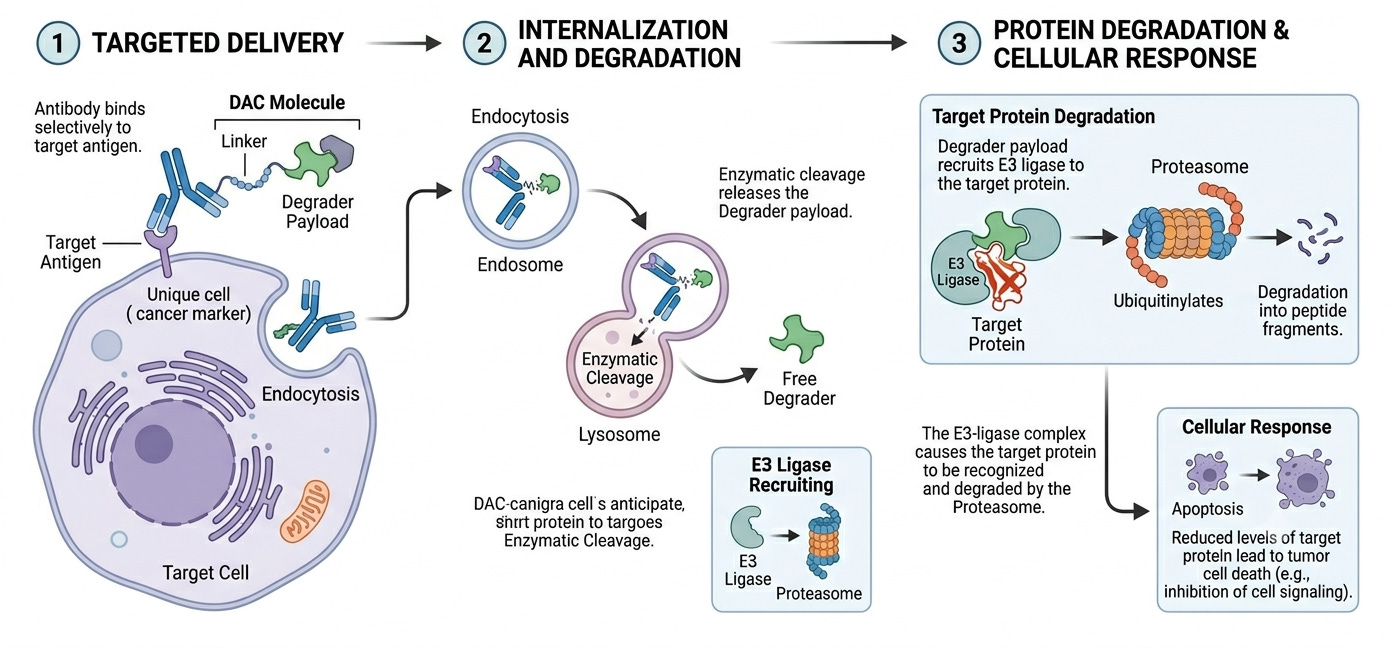
Yet, execution was an entirely different beast. Bridging these two modalities required an incredibly stable “linker” molecule that wouldn’t fall apart prematurely in the bloodstream. Recognizing the massive hurdle, venture capital firm Versant Ventures decided to incubate the concept inside their Ridgeline Discovery Engine in Basel, Switzerland. Over months of careful waiting, Versant pulled together a dream team:
The Academic Maven: They brought in Stanford professor and 2022 Nobel Laureate Carolyn Bertozzi. As the pioneer of bioorthogonal chemistry, Bertozzi was the world’s foremost expert on safely snapping complex molecules together inside living systems.
The Industry Veterans: They recruited John Flygare, who had led ADC teams at Genentech and Merck, to serve as Chief Scientific Officer (CSO) and Bernhard Geierstanger, a veteran of Novartis and Merck, to serve as Chief Technology Officer (CTO).
The Business Architect: To captain the ship, they tapped Scott Hirsch, an executive with a deep operational pedigree at Genentech and AbbVie, to step in as CEO.
With the team in place, Firefly Bio was quietly incorporated in late 2022. The founders chose the name “Firefly” because the bug’s natural glowing abdomen reminded them of an ADC’s glowing payload, a small burst of energy navigating the dark. For over a year, Firefly operated in complete secrecy, working to engineer a proprietary linker technology called Firelink™. The goal was to swap out traditional chemical toxins for protein degraders, ensuring the payload would hitch a ride safely on the antibody until it was precisely inside the cancer cell.
In February 2024, Firefly Bio officially broke stealth. Backed by a massive $94 million Series A funding round co-led by Versant Ventures and MPM BioImpact, with participation from Decheng Capital and pharmaceutical giant Eli Lilly, the company went public with its vision. CEO Scott Hirsch announced to the world that Firefly would leverage their DAC platform to, “hit biologically validated targets with minimal collateral damage.”
While many oncology platforms target specific mutations (like the single amino acid swap in KRAS G12C), Firefly leveraged its platform to go after a pan-KRAS approach. This means targeting all major variants of the mutated KRAS oncogene, which drives roughly a quarter of all human cancers, including up to 90% of pancreatic ductal adenocarcinomas (PDAC) and significant portions of colorectal and non-small cell lung cancers (NSCLC). Historically, KRAS has been deemed “undruggable” due to its smooth surface, which lacks deep pockets for traditional small-molecule inhibitors to lock into. Firefly’s preclinical candidates were designed to bypass this issue by leveraging a key feature of degraders. By changing the goal from inhibiting the protein’s active site to completely degrading the entire protein structure via the cell’s ubiquitin-proteasome system, Firefly achieved “significant reductions in tumor volume at very low doses” in preclinical solid tumor models. Meanwhile, the antibody component could expand the drug’s therapeutic window, plowing the degrader into cancer cells while aiming to avoid healthy cells.
Conclusion
The story of Firefly Bio is a testament to what happens when scientific creativity is given the room to jam. By pairing the targeting precision of an antibody with the catalytic, destructive power of a protein degrader, Firefly aims to introduce a new approach to the oncology arsenal. For Johnson & Johnson, the $1 billion acquisition represents a significant strategic bet on the potential of Firefly’s degrader antibody conjugate (DAC) technology and its pan-KRAS lead program. As Firefly’s platform transitions from a nimble, VC-backed syndicate into J&J’s massive development pipeline, throws down the gauntlet for competing biotechs rushing to target the ubiquitin-proteasome pathway. It’s a four horse race between J&J/Firefly (preclinical pan-KRAS degrader ADC), Gilead per their recent acquisition of Tubulis (two preclinical candidates with undisclosed targets), Prelude Therapeutics (preclinical CDK9 degrader ADC for CALR mutated MPN), and Fortitude Biomedicines (3 preclinical programs with undisclosed targets). The industry will be watching closely to see how DACs perform in human trials. While clinical translation always carries inherent risks and unpredictability, if the clinical data ultimately mirrors the elegance of the preclinical composition, the oncology landscape could get a whole lot brighter.
To contact us, please send us an email at biotechreadout@gmail.com
Disclaimers
Investigational Status Disclaimer
The therapeutic candidates discussed in this newsletter are currently in clinical development and have not been approved for commercial sale by the U.S. Food and Drug Administration (FDA), the European Medicines Agency (EMA), or other global regulatory authorities. Their safety and efficacy have not been established. References to pipeline products and ongoing clinical trials involve significant risks and uncertainties. Statements regarding the potential safety, potency, or efficacy of investigational drugs reflect current hypotheses and are not a guarantee of future performance or regulatory clearance. The outcome of clinical trials is inherently unpredictable, and clinical results from earlier stages may not be predictive of results in later, larger-scale trials.
No Medical Advice Disclaimer
This newsletter is for informational and educational purposes only. The content is not intended to be a substitute for professional medical advice, diagnosis, or treatment. Always seek the advice of your physician or another qualified health provider with any questions you may have regarding a medical condition. Never disregard professional medical advice or delay in seeking it because of something you have read in this publication.
No Patient-Provider Relationship Disclaimer
The information provided in this newsletter is for educational and analytical purposes only. Receipt of this information, or any interaction with this content, does not create a physician-patient, pharmacist-patient, or any other professional-provider relationship between you and the authors or publishers. This newsletter should not be used as a substitute for a personal consultation with a qualified healthcare professional.
Forward-Looking Statements Disclaimer
This newsletter contains “forward-looking statements” regarding future events, including clinical trial timing, regulatory milestones, and projected market performance. These statements are based on current expectations and assumptions that are subject to significant risks and uncertainties. Actual results may differ materially from those expressed or implied. We undertake no obligation to update these statements as a result of new information or future developments.
Third-Party Links & Content Disclaimer
This newsletter contains links to third-party websites, including clinical trial registries and corporate presentations. Biotech Readout does not endorse, guarantee, or assume responsibility for the accuracy or reliability of any information offered by third-party providers.
Errors and Omissions Disclaimer
While we strive for technical accuracy, the information in this newsletter is provided on an “as is” basis with no guarantees of completeness, accuracy, or timeliness. Biotech Readout assumes no liability for any errors or omissions in the content of this publication.
Non-Endorsement Disclaimer
Any reference to specific commercial products, processes, or services by trade name, trademark, or manufacturer does not constitute or imply an endorsement or recommendation by the author. All trademarks are the property of their respective owners.
No Investment Advice Disclaimer
This newsletter is for informational purposes only and does not constitute financial, investment, or legal advice. The author is not a registered investment advisor. You should consult with a professional financial advisor before making any investment decisions. The biotechnology sector is highly volatile; past performance is not indicative of future results.
Conflict of Interest Disclaimer
The author of this newsletter maintains a position of independence. At the time of publication, the author holds no direct financial interest, equity, or options in any of the companies mentioned in this report. No compensation has been received from any third party to feature or analyze specific therapeutic candidates or corporate entities.