

Disclaimer: This newsletter is for educational and informational purposes only and does not constitute medical, investment, or financial advice, nor does it establish a provider-patient relationship. Content may include forward-looking statements and discussions of investigational therapeutic candidates that are not FDA/EMA approved; their safety and efficacy remain unestablished and clinical outcomes are unpredictable. While we strive for accuracy, all information is provided as is without guarantees. This newsletter is independent, and the author holds no financial positions in the companies mentioned nor receives third-party compensation for this coverage. Revenue run rates are estimates based on the author’s synthesis of publicly available 10-K/10-Q filings and may not reflect GAAP-certified annual totals. Please find a complete version of our disclaimers at the bottom of this article and on our About page.

Introduction
On May 6, 2026, Bayer announced an agreement to acquire Perfuse Therapeutics Inc. for a total potential value of up to $2.45 billion, comprising a $300 million upfront payment and additional development, regulatory, and commercial milestone payments based on success criteria (Bayer press release, Perfuse press release). The centerpiece of the acquisition is PER-001, a small molecule endothelin receptor antagonist currently in Phase 2 clinical development for the treatment of Glaucoma and Diabetic Retinopathy (DR). These diseases fall under a broader clinical umbrella of Diabetic Eye Disease (DED).
Diabetic Eye Disease (DED) constitutes a blockbuster indication space, representing an aggregate revenue run rate of almost $11 billon as of 4Q 2025 according to quarterly press releases associated with Vabysmo, Eylea, Eylea HD, Pavblu, Lucentis, and Ozurdex*. There are about 14 in clinical development, making the field relatively sparse.
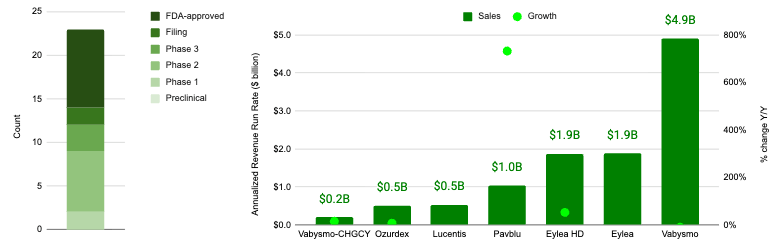
Acquisitions in the Diabetic Eye Disease space are just as sparse. Perfuse is among the rare DED-focused acquisition, with the another that comes to mind being Merck’s purchase of EyeBio in May 2024 for $1.3 billion in cash and up to $1.7 billion in potential future payments tied to specific developmental, regulatory, and commercial achievements (lead program was EYE103 now called MK-3000 was a Phase 2 ready tri-specific Wnt agonist for diabetic macular edema).
Most acquired DED-related drugs were reeled in through mega-mergers, in which the DED drug(s) constituted one of many pipeline candidates. This includes Novartis’ 2010 acquisition of Alcon for $12.9 billion (included Lucentis, Rhopressa, Simbrinza, and Triesence) and AbbVie’s 2020 acquisition of Allergan for $63 billion (included Ozurdex).
Here, we dive into the story of Perfuse Therapeutics, unpack Diabetic Retinopathy (DR) and glaucoma, describe how PER-001 could advance the standard of care.
All Eyes on Perfuse
The history of Perfuse Therapeutics is a classic stealth-to-success biotech narrative, beginning with a focus on a specific unmet need, retinal ischemia (blocked blood flow), and culminating in one of the most significant ophthalmology acquisitions of 2026.
Perfuse Therapeutics was founded in South San Francisco, California, by Dr. Sevgi Gurkan, a physician-scientist and biotech executive whose career bridges high-level academic research, clinical practice, and venture-backed drug development. She received her medical degree from Hacettepe University and completed her residency in Pediatrics at the University of Southern California (USC). She later earned degrees in Nephrology and a Master of Science in Clinical Research from the Mount Sinai School of Medicine. Afterwards, she served as an Associate Professor at Rutgers University and was the Director of the Pediatric Kidney Transplant Program at Robert Wood Johnson University Hospital. Dr. Gurkan was also one of the founding scientists of the Child Health Institute of New Jersey, where she conducted NIH-funded basic science research, balancing a full-time clinical load with laboratory work. Dr. Gurkan then transitioned into the corporate sector by taking on leadership roles at major pharmaceutical and venture firms:
Merck Research Laboratories (MRL): Dr. Gurkan was a founding member of the Merck Research Laboratories South San Francisco discovery site, where she served as a Director of Research. At Merck, she was responsible for launching new therapeutic areas and building a portfolio of novel mechanisms through both internal development and M&A. She originally joined Merck as a Medical Director in Early Clinical and Translational Development for Cardiometabolic Diseases.
OrbiMed: Dr. Gurkan joined OrbiMed in 2018 as a Venture Partner, where she focused on identifying and building companies around novel therapeutic mechanisms.
Dr. Sevgi Gurkan founded Perfuse in 2018, the exact same year she joined OrbiMed as a Venture Partner. This suggests that the company was incubated within the OrbiMed ecosystem. There, she served as CEO and a member of the Board of Directors. The company’s core mission was to pivot away from the industry’s singular focus on lowering intraocular pressure (IOP) and instead target ischemia-induced ocular diseases. The team believed that many vision-threatening conditions, particularly glaucoma and diabetic retinopathy, were driven by poor blood flow (hypoperfusion) caused by an overabundance of Endothelin-1, the body’s most potent vasoconstrictor. The company established its headquarters in the Bay Area but maintained critical R&D facilities in Durham, North Carolina, tapping into the regional expertise in ocular drug delivery.
In July 2020, Perfuse closed a $9 million Series A round (though some reports suggest the total raised was closer to an undisclosed amount with participation from Access Industries and Catalio Capital Management). During this period, the company perfected its proprietary sustained-release drug delivery platform. Unlike standard drops, they developed a bio-erodible intravitreal implant that could be injected with a 25-gauge applicator, allowing for 6-month dosing of their lead asset, PER-001. By late 2022, Perfuse had successfully transitioned from a pre-clinical research outfit to a clinical-stage biotech.
The most critical chapter in the company’s history occurred during the clinical testing of PER-001. In August 2023, Perfuse initiated a major Phase 2 study for Diabetic Retinopathy (DR). The trial aimed to prove that an endothelin receptor antagonist could not only dry the retina but also improve contrast sensitivity and reduce ischemia. In April 2025, the company reported reported top-line Phase 2a data for both glaucoma and DR. Theresults were notable for observed numerical improvements in visual field sensitivity, a functional signal that has historically been difficult to achieve with pressure-lowering agents alone.
The history of Perfuse as an independent company effectively ended nearly a year later on May 6, 2026, with the announcement of its acquisition by Bayer. For Bayer, the acquisition secured a product that complements their blockbuster ophthalmology drug, Eylea. For Perfuse, the deal provides the “scale and global resources” to take PER-001 through Phase 3, regulatory review, and (if approved) into the hands of millions of patients globally.
Diabetic Retinopathy (DR), Blindness by Blood Vessel
As I alluded to earlier, Diabetic Eye Disease (DED) is a broad family of specific conditions that share the same root cause (chronically high blood sugar), but impact the eye in very different ways.
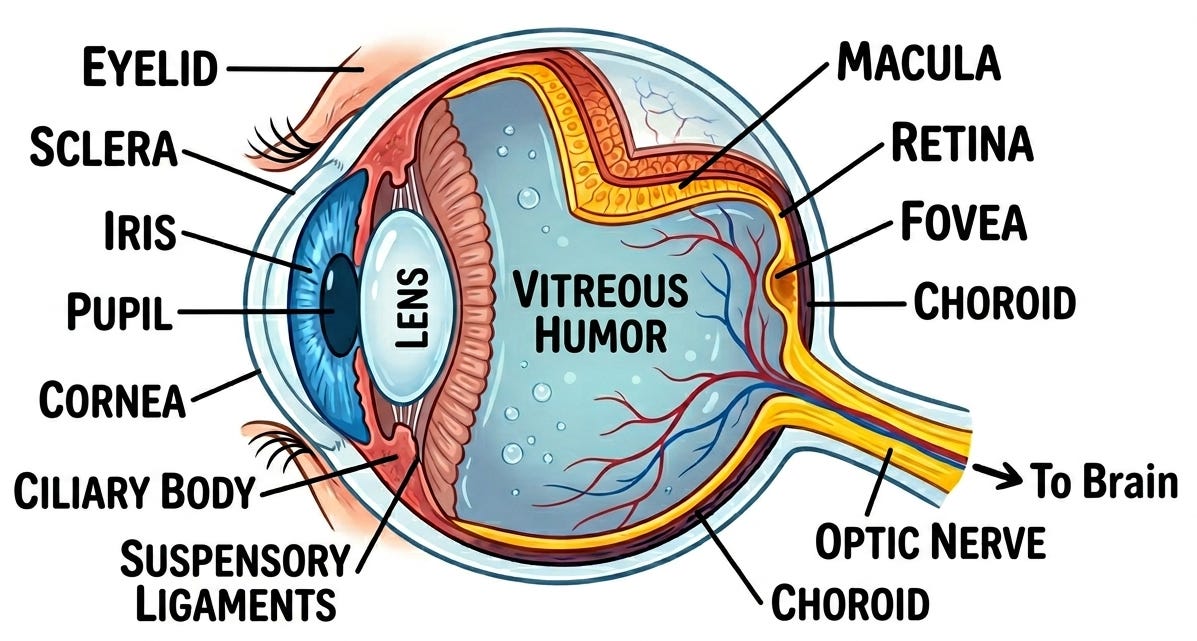
Retinal vascular disorders are the most common subfamily of DED and are driven by the breakdown of the blood-retinal barrier at the back of the eye that disrupts the retina, the light-sensitive layer inside the eye that detects light and converts it into signals your brain can use for vision. Diabetic Retinopathy (DR) is the most common cause of vision loss among working-age adults. It is characterized by the death of blood-vessel-molding pericytes due to oxidative stress (secondary to Polyol pathway overstimulation), followed by vascular leakage (“microaneurysms”) and blockage (“ischemia”), and ultimately excessive vascular growth as the eye desperately attempts to restore blood and oxygen to the retina. These new vessels can be very problematic by blocking light from hitting the retina/optic nerve or even detaching the retina from the back of the eye. According to Bayer’s market research, DR “affects about 146 million people globally today and is projected to increase to 160 million people by 2045.” Furthermore, “25 million people [currently] have vision‑threatening DR and 1.3 million people are blind.”
The standard of care for Diabetic Retinopathy (DR) has shifted significantly in 2025–2026. The clinical focus has moved from watchful waiting to early intervention and long-term vascular stabilization. This new paradigm is led by anti-VEGF (vascular endothelial growth factor) agents. These drugs prevent vision loss by inhibiting the formation of abnormal, leaky blood vessels in the retina.
Aflibercept (Eylea / Eylea HD): The recently launched 8 mg high-dose formulation (Eylea HD) has seen rapid adoption because it allows for extended dosing intervals (up to 4 months), reducing the injection burden for patients.
Faricimab (Vabysmo): Since its approval, Vabysmo has been the fastest-growing competitor to Eylea. It is a bispecific antibody that targets both VEGF and Ang-2, which may provide better vascular stability and longer durability than traditional anti-VEGFs.
Ranibizumab (Lucentis / Susvimo): While Lucentis sales have declined due to biosimilar competition, the Susvimo continuous delivery system (a refillable implant) is a high-value product for DR patients needing long-term suppression with fewer visits.
How does Perfuse Therapeutics fit in? Their lead program, PER-001, is a potent Endothelin-1 (ET-1) receptor antagonist. Since ET-1 is the body’s most powerful vasoconstrictor, blocking it allows constricted vessels to dilate and restores blood flow to ischemic areas of the retina. By improving perfusion, PER-001 could potentially prevent the death of retinal cells rather than just drying up the fluid they leak.
Data presented at American Society of Retina Specialists (ASRS) 2025 medical meeting suggests that PER-001 could provide functional vision improvements that anti-VEGFs often miss. Their Phase 2a trial demonstrated that functional visual gains can be achieved even while the Diabetic Retinopathy Severity Scale (DRSS) remains stable. Treatment with PER-001 delivered superior outcomes across all primary functional metrics:
Low Luminance Contrast Sensitivity: The High Dose group showed a mean improvement of +0.9 dB, while the Low Dose group improved by +0.65 dB. Compared to the -2.1 dB worsening in the sham control, this represents a delta of ~3 dB. Clinically, a 3 dB gain is equivalent to three lines of vision (15 ETDRS letters), a major regulatory benchmark.
Visual Acuity: Patients treated with PER-001 avoided the decline observed in the control group, showing a mean difference of +5.07 to +5.47 letters compared to control.
Peripheral Vision: Patients with baseline deficits showed an improvement of +1.8 dB/year (Low Dose) compared to negligible change (+0.01 dB) in the control.
While anti-VEGF helps patients read letters on a bright chart (BCVA), PER-001 appears to help patients see better in dimly lit environments or distinguish subtle textures, which are major complaints for diabetic patients.
One of the most disruptive aspects of PER-001 is its delivery system. It is a bio-erodible intravitreal implant (utilizing PLGA polymer technology similar to Ozurdex) designed for 6-month sustained release. This could catalyze the shift from injections every 4–8 weeks (Standard Eylea) to a twice-yearly implant, which could address the compliance gap that leads to real-world vision loss in DR patients.
Glaucoma, Blindness by Pressure in the Eye
Glaucoma another disease that Perfuse’s PER-001 was designed to treat and is often described as the “silent thief of sight” because it typically progresses without pain or noticeable symptoms until significant permanent damage has occurred. Bayer defines glaucoma as a “progressive optic neuropathy that causes the loss of retinal ganglion cells, resulting in loss of visual fields.” While most forms of glaucoma are chronic and progressive, certain types are considered medical emergencies. If left untreated, chronic glaucoma can lead to irreversible blindness. As Bayer puts it:
Glaucoma […] is the leading cause of irreversible vision loss affecting ~76-80 million people worldwide (2020) and is projected to affect ~112 million people by 2040 due to population aging.
Unlike DR, the glaucoma market is heavily genericized, but fixed-dose combinations and novel delivery platforms can improve patient compliance. The medical standard of care for glaucoma focuses on a stepped approach to lowering intraocular pressure (IOP) to a target level that prevents optic nerve damage, primarily through the use of prostaglandin analogues (PGAs) like latanoprost or bimatoprost as first-line therapy due to their high efficacy and once-daily dosing. If PGAs are insufficient, clinicians typically introduce adjunctive therapies such as beta-blockers (e.g., timolol) or carbonic anhydrase inhibitors to decrease fluid production, or alpha-agonists and Rho kinase (ROCK) inhibitors (e.g., Rhopressa) to further enhance aqueous outflow. To improve adherence and reduce the washout effect of multiple drops, fixed-dose combinations like Combigan or Simbrinza are frequently utilized, while the most recent advancements in the pharmaceutical standard of care include sustained-release implants like iDose TR, which provide continuous medication for months to eliminate the patient’s daily burden of self-administration.
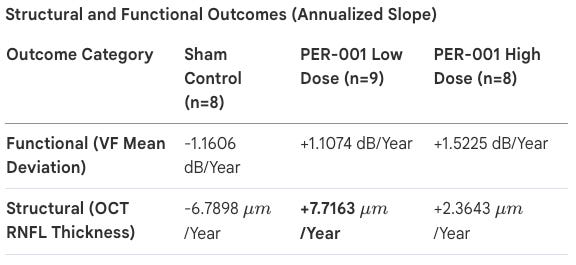
While traditional standard of care targets intraocular pressure (IOP), Perfuse’ PER-001 addresses the 50% of patients who continue to progress toward blindness despite having normal or controlled pressure. PER-001, a small-molecule endothelin-1 (ET-1) receptor antagonist, targets the blood flow of the eye. ET-1 is the most potent vasoconstrictor in the body and is upregulated in glaucoma patients, starving the optic nerve of oxygen. PER-001 blocks ET-1 receptors to dilate constricted vessels, directly increasing Optic Nerve Head Blood Flow (ONH-BF). The Phase 2a clinical trial for PER-001 in 33 patients with progressive mild-to-moderate glaucoma demonstrated significant improvements across functional, structural, and physiological metrics over a 24-week period. The data was presented on May 6, 2025 by Steven Mansberger, MD, MPH, in an oral presentation at the Association for Research in Vision and Ophthalmology (ARVO) 2025 Annual Meeting titled “PER-001, an endothelin antagonist, increased optic nerve head blood flow with structural and functional improvements in patients with glaucoma”. In this specific Phase 2a cohort (n=33), investigators observed numerical improvements in annualized Visual Field (VF) deviation (see summary table below). Further large-scale pivotal trials are required to confirm these preliminary findings.
PER-001 was found to be “safe and well-tolerated”, according to Perfuse. The only drug-related adverse events were two cases of vitreous floaters, which were mild, intermittent, and resolved on their own. There were no reports of serious adverse events (SAEs), intraocular inflammation, or changes in IOP therapy.
Conclusion
Ultimately, the Perfuse Therapeutics story could offer a new hope for the millions of patients currently slipping through the cracks of the standard of care. Whether it’s the glaucoma patient whose vision fades despite “normal” pressure, or the diabetic patient struggling with low-light contrast, PER-001 targets the ischemia that current blockbusters ignore. By combining Dr. Gurkan’s vasculature-first vision with Bayer’s global infrastructure, the path to a twice-yearly, disease-modifying implant could be on the horizon. As PER-001 transitions into its pivotal trial program later this year, all eyes will be on its ability to maintain early efficacy signals and clear regulatory review.
To contact us, please send us an email at biotechreadout@gmail.com
Disclaimers
*Revenue run rates are estimates based on the author’s synthesis of publicly available 10-K/10-Q filings and may not reflect GAAP-certified annual totals.
Investigational Status Disclaimer
The therapeutic candidates discussed in this newsletter are currently in clinical development and have not been approved for commercial sale by the U.S. Food and Drug Administration (FDA), the European Medicines Agency (EMA), or other global regulatory authorities. Their safety and efficacy have not been established. References to pipeline products and ongoing clinical trials involve significant risks and uncertainties. Statements regarding the potential safety, potency, or efficacy of investigational drugs reflect current hypotheses and are not a guarantee of future performance or regulatory clearance. The outcome of clinical trials is inherently unpredictable, and clinical results from earlier stages may not be predictive of results in later, larger-scale trials.
No Medical Advice Disclaimer
This newsletter is for informational and educational purposes only. The content is not intended to be a substitute for professional medical advice, diagnosis, or treatment. Always seek the advice of your physician or another qualified health provider with any questions you may have regarding a medical condition. Never disregard professional medical advice or delay in seeking it because of something you have read in this publication.
No Patient-Provider Relationship Disclaimer
The information provided in this newsletter is for educational and analytical purposes only. Receipt of this information, or any interaction with this content, does not create a physician-patient, pharmacist-patient, or any other professional-provider relationship between you and the authors or publishers. This newsletter should not be used as a substitute for a personal consultation with a qualified healthcare professional.
Forward-Looking Statements Disclaimer
This newsletter contains “forward-looking statements” regarding future events, including clinical trial timing, regulatory milestones, and projected market performance. These statements are based on current expectations and assumptions that are subject to significant risks and uncertainties. Actual results may differ materially from those expressed or implied. We undertake no obligation to update these statements as a result of new information or future developments.
Third-Party Links & Content Disclaimer
This newsletter contains links to third-party websites, including clinical trial registries and corporate presentations. Biotech Readout does not endorse, guarantee, or assume responsibility for the accuracy or reliability of any information offered by third-party providers.
Errors and Omissions Disclaimer
While we strive for technical accuracy, the information in this newsletter is provided on an “as is” basis with no guarantees of completeness, accuracy, or timeliness. Biotech Readout assumes no liability for any errors or omissions in the content of this publication.
Non-Endorsement Disclaimer
Any reference to specific commercial products, processes, or services by trade name, trademark, or manufacturer does not constitute or imply an endorsement or recommendation by the author. All trademarks are the property of their respective owners.
No Investment Advice Disclaimer
This newsletter is for informational purposes only and does not constitute financial, investment, or legal advice. The author is not a registered investment advisor. You should consult with a professional financial advisor before making any investment decisions. The biotechnology sector is highly volatile; past performance is not indicative of future results.
Conflict of Interest Disclaimer
The author of this newsletter maintains a position of independence. At the time of publication, the author holds no direct financial interest, equity, or options in any of the companies mentioned in this report. No compensation has been received from any third party to feature or analyze specific therapeutic candidates or corporate entities.