
Argenx to Acquire Forte Biosciences
How Paul Wagner's pivot from microbiome medicines to CD122 for celiac and vitiligo paid off

Disclaimer: This newsletter is for educational and informational purposes only and does not constitute medical, investment, or financial advice, nor does it establish a provider-patient relationship. Content may include forward-looking statements and discussions of investigational therapeutic candidates that are not FDA/EMA approved; their safety and efficacy remain unestablished and clinical outcomes are unpredictable. While we strive for accuracy, all information is provided as is without guarantees. As of the date of publication, the author holds no direct equity positions in the specific companies mentioned in this issue nor receives third-party compensation for this coverage. Please find a complete version of our disclaimers linked here.

If you are a paid subscriber, go to vitiligo competitive landscape here ⬇️
If you are a free reader or subscriber, enjoy the whole article free of charge and consider upgrading for competitive landscapes of disease areas & therapeutics modalities; view samples here.
Introduction
On July 27, 2026, Argenx announced a definitive agreement to acquire Forte Biosciences, Inc. for a total equity value of approximately $2.2 billion (Argenx press release, Forte press release). This acquisition centers on Forte’s lead program FB102, a potentially first-in-class anti-CD122 antibody that represents a “pipeline-in-a-product” opportunity, according to Argenx:
Vitiligo: Forte published Phase 1b data recently.
Celiac Disease: Forte reported Phase 1b data and Argenx expects to report Phase 2 data in 2H 2026.
Alopecia Areata: Argenx expects to report Phase 1b data in 2H 2026.
In this article, we follow the journey of Dr. Paul A. Wagner, explore the founding story of Forte Biosciences, and discover how his pivot from microbiome medicines to vitiligo paid off.
Science Meets Spreadsheets
The story of Dr. Paul A. Wagner reflects a rare blend of deep academic science, financial acumen, and hands-on corporate leadership in biopharmaceuticals. Dr. Wagner built his foundation at the intersection of chemistry and quantitative finance. He earned his Bachelor of Science from the University of Wisconsin before pursuing doctoral research at the California Institute of Technology (Caltech), where he completed his Ph.D. in Chemistry. Recognizing the critical role capital markets play in bridging scientific discoveries to commercial therapeutics, he also earned the Chartered Financial Analyst (CFA) designation.
In 1999, Dr. Wagner entered Wall Street, joining Lehman Brothers as Vice President. Over six years in investment banking, he advised biotechnology and pharmaceutical leadership on capital raises, M&A structuring, and public offerings. In 2005, he transitioned directly into industry as Head of Development Licensing at PDL BioPharma, evaluating licensing transactions and strategic asset acquisitions.
Dr. Wagner returned to the buy-side in 2006, joining Allianz Global Investors as Director, Senior Equity Analyst, and Portfolio Manager. For eight years, he managed dedicated public market portfolios, conducting fundamental due diligence on clinical data, regulatory landscapes, and commercial positioning across global drug developers. Armed with extensive experience evaluating life sciences balance sheets and clinical strategy, Dr. Wagner moved back into corporate executive leadership in 2014. At Pfenex Inc. (2014-2017), he served as Chief Financial Officer (CFO), steering financial operations, investor relations, and capital allocation for the biotechnology firm. He then departed Pfenex for a brief stint at CANBridge Life Sciences (2017), where he served as Head of Corporate Strategy and Development, overseeing pipeline expansion, cross-border licensing, and strategic partnerships.
In 2017, Dr. Wagner founded Forte Biosciences, taking on the roles of Chief Executive Officer (CEO) and Chairperson of the Board. Drawing on his background across Wall Street and corporate strategy, he structured Forte to navigate complex biotech markets. In 2020, he orchestrated the reverse merger with Tocagen, securing corporate financing and bringing Forte onto the NASDAQ.
Bugs as Drugs
At the time of its founding, Forte aimed to fill a gap in pediatric dermatology by treating atopic dermatitis (AD), commonly known as eczema. Their thesis was to do so without relying heavily on topical corticosteroids or broad immunosuppressants, which carry risks of skin atrophy, systemic toxicity, and rebound flare-ups.
The scientific cornerstone of Forte’s early program emerged from discoveries at the National Institutes of Health (NIH). Researchers found that the skin of healthy individuals contained specific strains of commensal Gram-negative bacteria, most notably Roseomonas mucosa, which were largely deficient or entirely missing in patients with atopic dermatitis. The hypothesis behind Forte’s lead program, FB-401, was straightforward. By topically reintroducing healthy R. mucosa, the medicine might be able to re-establish skin microbiome diversity. The live bacterial strains produced lipid molecules that could actively suppress the overgrowth of Staphylococcus aureus, a primary driver of eczema flares. Furthermore, R. mucosa activated tissue-repair mechanisms (such as vitamin D pathway signaling) to restore the damaged epidermal barrier.
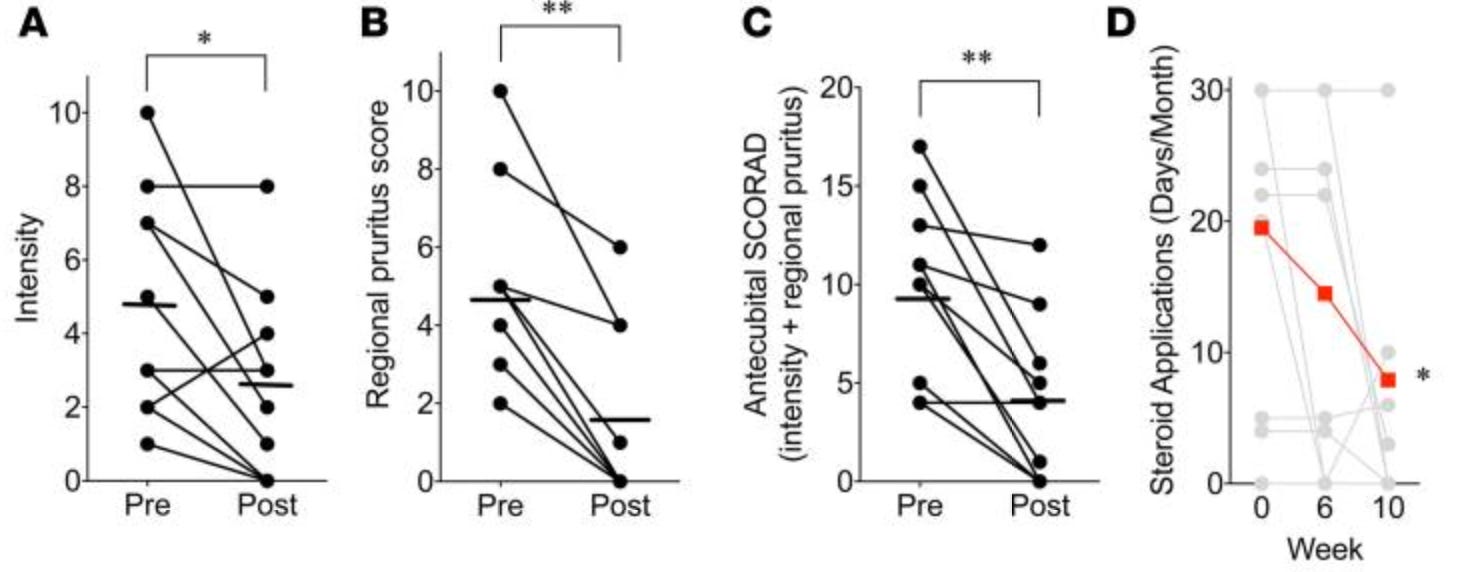
Forte licensed the technology, developed its proprietary three-strain formulation and moved into early clinical evaluation. The initial open-label Phase 1/2 clinical trial for FB-401 (topical Roseomonas mucosa) was conducted by Dr. Ian Myles and his team at the NIH (NIAID) and evaluated the safety and early clinical activity of live commensal bacteria in patients with mild-to-moderate atopic dermatitis. A 2018 interim analysis published in JCI Insights, showed that FB-401 treatment resulted in deep enough reductions in itch intensity (“pruritus”) and disease severity (“SCORAD”) to reduce the need for steroids (see graphs below). A follow-up analysis of the same trial published in 2022 in Science Translational Medicine showed that 85% of children (17 out of 20) treated with twice-weekly FB-401 achieved a >50% improvement in disease severity (SCORAD index).
By mid-2020, riding the momentum of positive Phase 1/2a data from the NIH and a fresh public listing via a reverse merger, Forte launched its crucial randomized, double-blind, placebo-controlled Phase 2 clinical trial. The trial enrolled 154 patients (both adult and pediatric, ages 2 and older) diagnosed with mild-to-moderate atopic dermatitis across multiple clinical sites. Participants were randomized 1:1 to receive either topically applied FB-401 or a vehicle placebo spray three times per week over a 16-week period. Expectations were high, as FB-401 was touted as a potential paradigm shift away from standard-of-care topical steroids and calcineurin inhibitors.
However, on September 2, 2021, Forte released topline results that shattered the thesis behind FB-401. Approximately 58% of patients in the FB-401 treatment arm achieved an EASI-50 response, compared to 60% in the vehicle placebo control arm. FB-401 showed no statistically significant difference over placebo at any post-baseline visit. Forte immediately discontinued all further development of FB-401 but, instead of liquidating the company, Forte preserved its remaining treasury (holding tens of millions in cash reserves) to engineer an internal platform transition.
Three lessons emerged from the wake of this setback:
The Open-label Trap: Open-label early phase trials can provide initial safety data and mechanistic proof-of-concept, but don’t always predict efficacy in blinded settings. Relying heavily on open-label signals without an early blinded placebo control arm creates a high risk of overestimating drug effect size. The initial excitement for FB-401 was built largely on single-arm, open-label data generated by the NIH. In open-label dermatological trials, both patient-reported outcomes (like itching) and physician-assessed outcomes (like SCORAD or EASI) may have been vulnerable to significant investigator bias.
Placebo Inflation: In dermatological trials, the control vehicle is rarely a true “placebo.” The vehicle matrix (e.g., creams, sprays, ointments, emollients) often acts as an active therapeutic agent by hydrating the stratum corneum, restoring skin lipid barriers, and reducing transepidermal water loss. Trial designers must assume high vehicle response rates and explicitly design trials (for example, via run-in periods or vehicle optimization) to suppress background vehicle effects or power the trial size accordingly.
Careful Endpoint Selection: The primary endpoint for the FB-401 Phase 2 trial was EASI-50 (a 50% improvement in the Eczema Area and Severity Index). While EASI-50 was historically used in early-stage trials, setting a low threshold allows mild improvements driven by vehicle hydration or patient trial-compliance (the “Hawthorne effect”) to cross the response line, inflating placebo rates. Modern AD trials increasingly rely on EASI-75, EASI-90, or Valid IGA (Investigator Global Assessment) 0/1 (Clear/Almost Clear) as primary or co-primary endpoints. Higher efficacy bars reduce the proportion of placebo responders crossing the threshold, widening the statistical delta between active and control arms. Aligning early-phase endpoints with registration-grade expectations (FDA/EMA standards) prevents false positives during Phase 2 transitions.
Forte’s Second Act
Following the clinical failure of its early topical live biotherapeutic candidate (FB401 for atopic dermatitis), Forte deliberately shifted focus toward scalable, high-value biologic targets in broader immunology. Between late 2022 and 2023, Forte Biosciences initiated the filing of its core global provisional and utility patent applications covering its anti-CD122 monoclonal antibody, FB102.
Forte recognized that previous efforts targeting the IL-2 or IL-15 pathways had failed due to a lack of selectivity (causing vascular leak syndrome or non-selective Treg depletion). By generating a proprietary antibody specifically engineered to block the CD122 (IL-2R-beta) subunit while preserving the high-affinity interactions with CD25 (IL-2R-alpha), they found a distinct therapeutic window that other biologics missed. Forte tested FB102 across non-human primates (NHPs) and ex-vivo human tissue models. They observed that FB102 selectively blocked IL-2/IL-15-mediated phosphorylation of STAT5 in pathogenic effector T and NK cells without triggering cytokine release storms or shutting down baseline Treg signaling. These biomarker readouts gave leadership the conviction needed to commit the entire enterprise to FB102. Indication selection was also key. Rather than competing in crowded markets like psoriasis, Forte focused FB102 on indications with high unmet need and strong IL-15/IL-2 mechanistic drivers, specifically celiac disease (where intraepithelial lymphocytes are IL-15-dependent) and vitiligo.
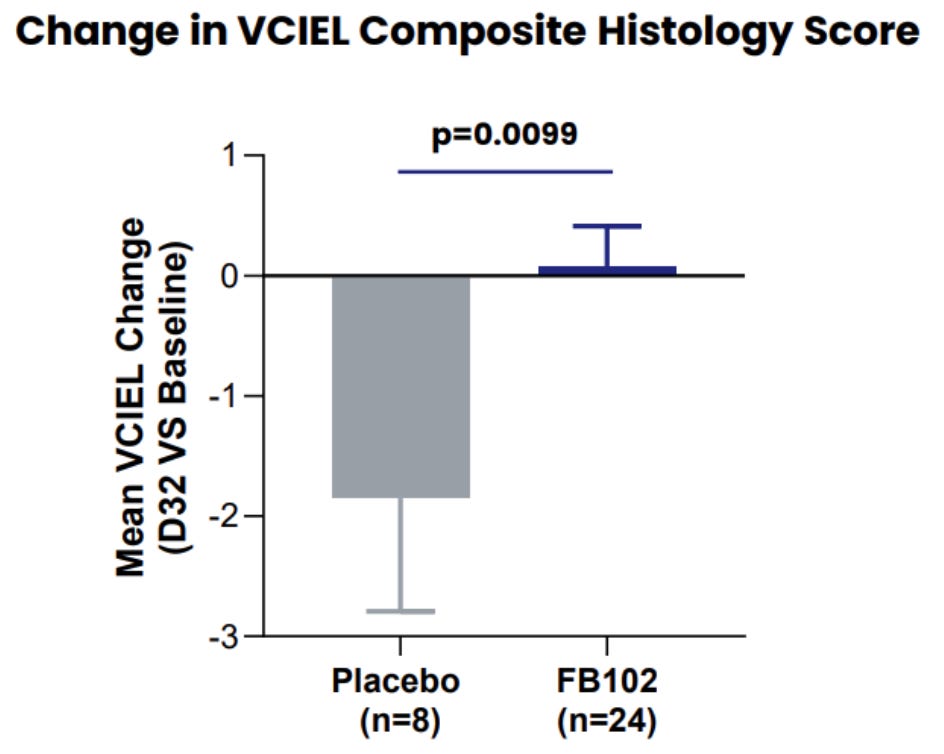
In June 2025, Forte announced topline data from its Phase 1b trial of FB102 in celiac disease. The trial met the primary composite histological endpoint measuring villous height-to-crypt depth ratio and intraepithelial lymphocyte count (VCIEL) (see graph below). Biopsy analyses showed a statistically significant reduction in CD3+ intraepithelial T-cell density in the gut mucosa compared to placebo, directly validating that targeting CD122 dampens the localized IL-15-driven pathogenic T-cell cascade. Lastly, FB102-treated patients experienced a 42% reduction in acute gastrointestinal symptom events following gluten challenge relative to placebo (mean of 4.0 events per subject on FB102 vs. 6.9 events on placebo). These results served as the first clinical proof-of-concept for FB102, showing that CD122 could be a viable human target in mucosal auto-inflammation. The data enabled Forte to immediately initiate its Phase 2 celiac study.
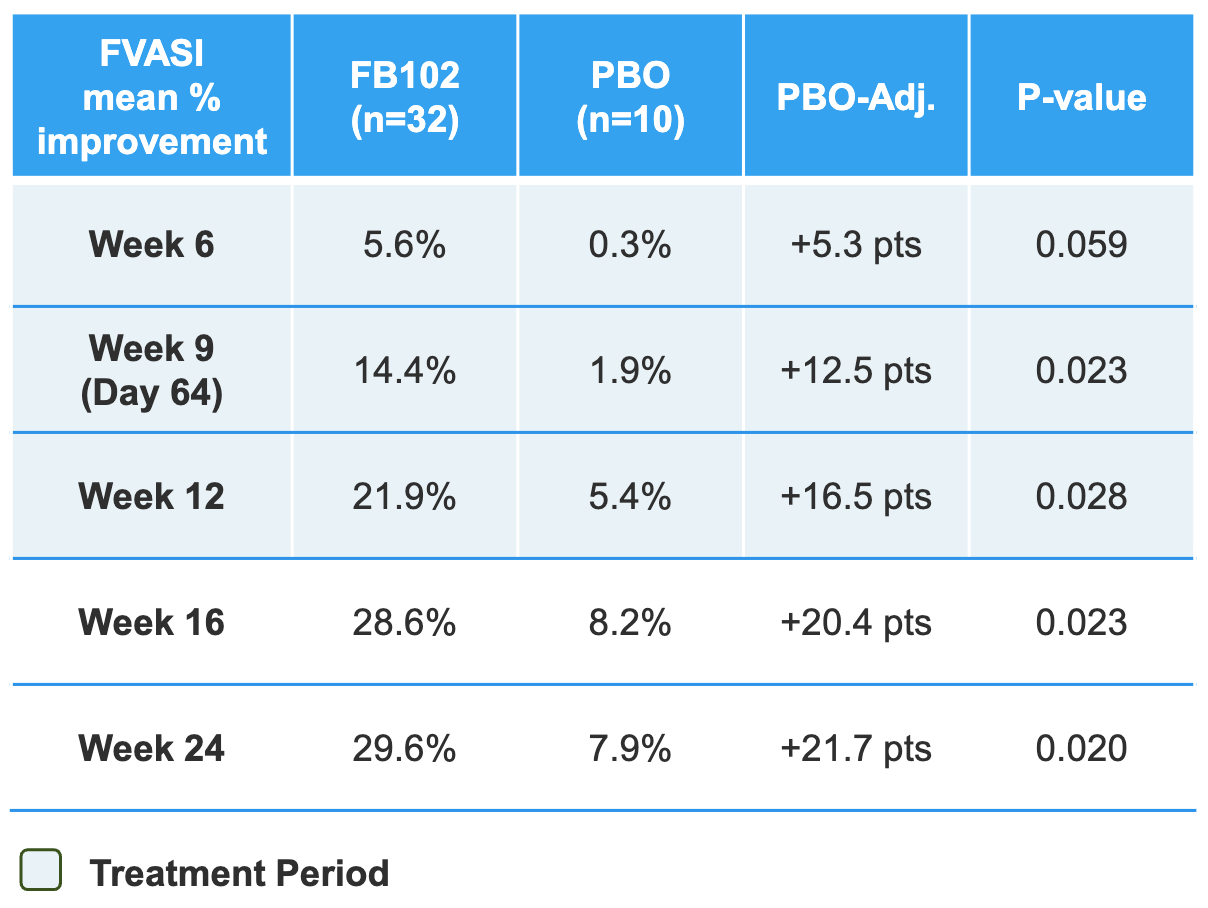
A little more than a year later on July 9, 2026, Forte announced topline data from its double-blind, placebo-controlled Phase 1b trial of FB102 in vitiligo. In the protocol-defined efficacy-evaluable population, FB102 achieved a 29.6% mean improvement from baseline in the Facial Vitiligo Area Scoring Index (F-VASI) at Week 24, compared to 7.9% for placebo (p = 0.020), representing a placebo-adjusted benefit of 21.7% (see table below). Note that this 24-week timepoint represents repigmentation that continued to deepen after active treatment stopped at Week 12. FB102 subjects gained an additional 8 percentage points in mean F-VASI between Weeks 12 and 24 (and an additional 14 percentage points in the severe baseline subgroup). In a pre-specified subgroup of subjects with more severe facial involvement (25% depigmentation), FB102 produced a 43.2% mean F-VASI improvement versus 0.5% for placebo (p = 0.006). Notably, no treatment-emergent signals of systemic toxicity, broad immunosuppression, or cytokine release syndrome were reported in the trial population, supporting FB102’s rationale for targeting CD122 to hit cytotoxic effector/memory T cells and NK cells without interfering with Tregs.
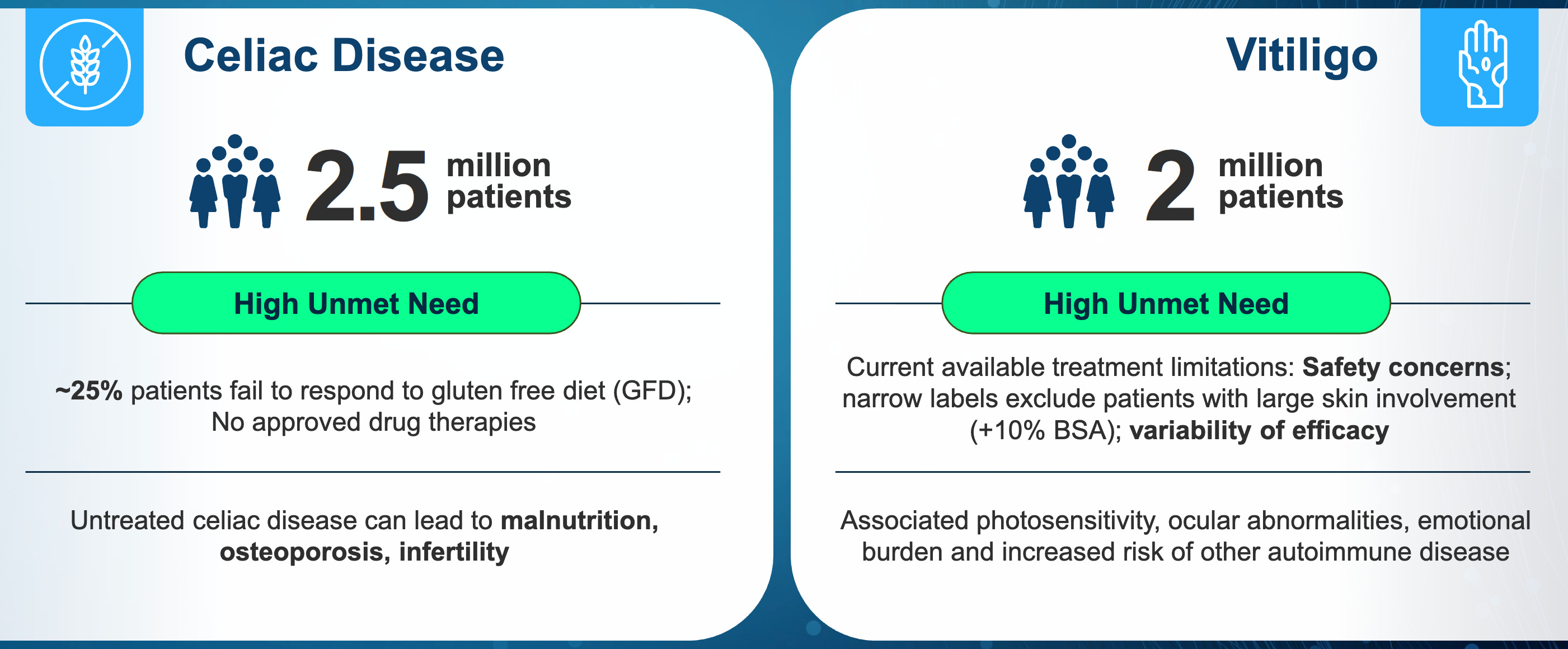
Less than a month later on July 27, 2026, Argenx swooped in and secured an agreement to acquire Forte Biosciences for approximately $2.2 billion. Argenx was not coming into the deal cold. They had already taken a strategic minority position in Forte during Forte’s ~$150 million financing round earlier that year in April 2026. Argenx evaluated the full vitiligo dataset alongside last year’s positive Phase 1b celiac data. As Argenx leadership later noted, seeing clear efficacy across two completely different tissue types (skin and gut) provided the definitive proof-of-concept needed to trigger a full takeover (see below). Rather than waiting for Forte’s ongoing Phase 2 celiac data (expected in the second half of 2026), argenx moved quickly to lock up FB102 to support their Vision 2030 immunology growth strategy.
Conclusion
The story of Forte Biosciences is a masterclass in clinical resilience and strategic agility. Dr. Paul Wagner’s willingness to pivot away from a failed live microbione candidate and double down on the targeted immunology of FB102 ultimately unlocked $2.2 billion in value and positioned Argenx to expand its autoimmune footprint across skin and gut conditions. All eyes now turn to Argenx as FB102 advances through Phase 2 trials in celiac disease and beyond.
Vitiligo Competitive Landscape
All charts reflect data current as of the specified date and may not include every drug development program, although we aimed to capture the vast majority. Please feel free to email me at biotechreadout@gmail.com with “CHARTS” in the subject line to share suggestions or request chart updates.
Press ⬇️ to navigate to a section
Notable Acquisitions in Vitiligo ⬇️
Target Landscape in Vitiligo ⬇️
Vitiligo Pipeline of Strategic Acquirers ⬇️
