
AI and the Decline of Artisanal Labor, Part 1
What the 1st and 2nd Industrial Revolutions tell us about the future of artificial intelligence (AI)

Disclaimer: This newsletter is for educational and informational purposes only and does not constitute medical, investment, or financial advice, nor does it establish a provider-patient relationship. Content may include forward-looking statements and discussions of investigational therapeutic candidates that are not FDA/EMA approved; their safety and efficacy remain unestablished and clinical outcomes are unpredictable. While we strive for accuracy, all information is provided as is without guarantees. This newsletter is independent; the author holds personal financial positions in certain technology equities and market index funds (detailed in the ‘Conflict of Interest Disclaimer’ below) but receives no third-party compensation for this coverage. Please find a complete version of our disclaimers at the bottom of this article and on our About page.

Introduction
Did you really think that I would only write about biotech? Well, if you did, you are correct. I will only write about biotech. This piece is a rare exception.
I’m going off-script to write this piece about artificial Intelligence (AI) due, in part, to its ever-present rise, but also because I believe that I have something new to add to the conversation that hasn’t already been said before. AI has, without a doubt, set off a chain of events that will lead humanity to a new place, but what does that place look like? Dream or doom? Eden or Erebus?
Humanity has seen this story before, or at least different flavors of it. First, here is what what I will not talk about:
I will not aim to characterize AI as “good” or “bad”
I will not aim to disseminate
propagandaperspectives advanced by specific AI labsI will not aim to promote one political ideology over another
Instead, I aim to objectively unpack historical case studies and surface conclusions from first principles. I aim to sift through the past to determine what could be in store for humanity in the age of artificial intelligence (AI), focusing on the decline of artisanal labor and the rise of new forms of labor.
ChatFYI
To make sure we are all on the same page, I will briefly summarize the development of AI as we know it today. Feel free to skip this section if you are familiar with AI, or want to go straight to the history of technological innovation.
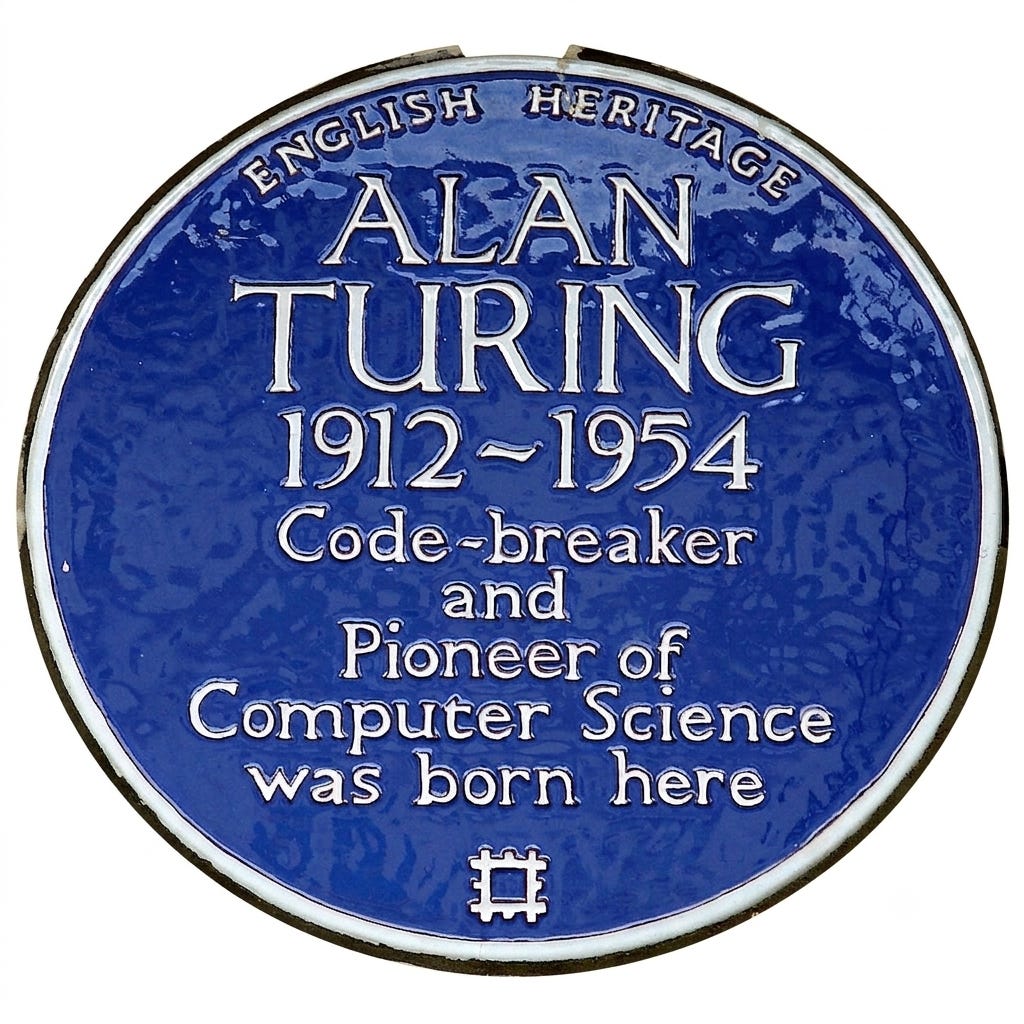
The formal birth of AI began in the mid-20th century, driven by the belief that human thought could be reduced to the manipulation of symbols and logic. In 1950, Alan Turing published Computing Machinery and Intelligence, asking the question, “Can machines think?” He proposed the Imitation Game (now called the Turing Test) as a benchmark for machine intelligence. Six years later, John McCarthy, Marvin Minsky, Nathaniel Rochester, and Claude Shannon organized a summer research project at Dartmouth College. This is where the term Artificial Intelligence was officially coined. Early success came from “Good Old-Fashioned AI” (GoFiAI). Programs like the Logic Theorist and later Expert Systems used strict “if-then” rules programmed by human experts to solve specific problems. The field was born, but by the mid-1970s, early optimism collapsed. Computers lacked the processing power and memory to handle real-world complexity, leading to severe funding cuts.
As rule-based systems stalled, a rival philosophy emerged: Connectionism. Instead of programming rules, researchers wanted to mimic the structure of the human brain using artificial neural networks. A methodology called backpropagation was popularized by Geoffrey Hinton, David Rumelhart, and Ronald Williams in 1986. This mathematical algorithm allowed neural networks to learn from their mistakes by adjusting the weights of their connections backward through the network. The 1990s shifted focus toward specific, isolated tasks using probabilistic models and machine learning. This era culminated in 1997 when IBM’s Deep Blue defeated world chess champion Garry Kasparov.
For decades, neural networks were limited because they couldn’t be trained effectively at a large scale. In the late 2000s, three ingredients changed everything: Compute (GPUs), Data (The Internet), and Algorithmic Breakthroughs. Alex Krizhevsky, Ilya Sutskever, and Geoffrey Hinton entered a neural network called AlexNet into the ImageNet visual recognition competition in 2012. It crushed traditional computer vision methods, proving that Deep Learning (networks with many hidden layers) powered by GPUs was the future. For language, researchers used Recurrent Neural Networks (RNNs) and Long Short-Term Memory (LSTM) networks. These processed text sequentially (word by word), which was a major step forward for machine translation but struggled with long paragraphs and couldn’t be easily parallelized on hardware.
The modern era of AI began with a single, foundational paper entitled Attention Is All You Need was published by Google researchers in 2017. This paper introduced the Transformer architecture. Instead of reading text word-by-word, Transformers use a mechanism called Self-Attention to process an entire sequence of text simultaneously. It tracks the relationships between words across vast distances in a text, allowing for massive parallel processing on GPUs. OpenAI and other labs realized that if you made Transformer models larger (more parameters) and fed them more data, they began to show emergent abilities like reasoning, coding, and roleplaying. While raw Large Language Models (LLMs) were powerful, they were unpredictable. The key unlock for the public was making them conversational and aligned with human intent. By using Reinforcement Learning from Human Feedback (RLHF), developers trained models to act as helpful assistants rather than just text-completers.
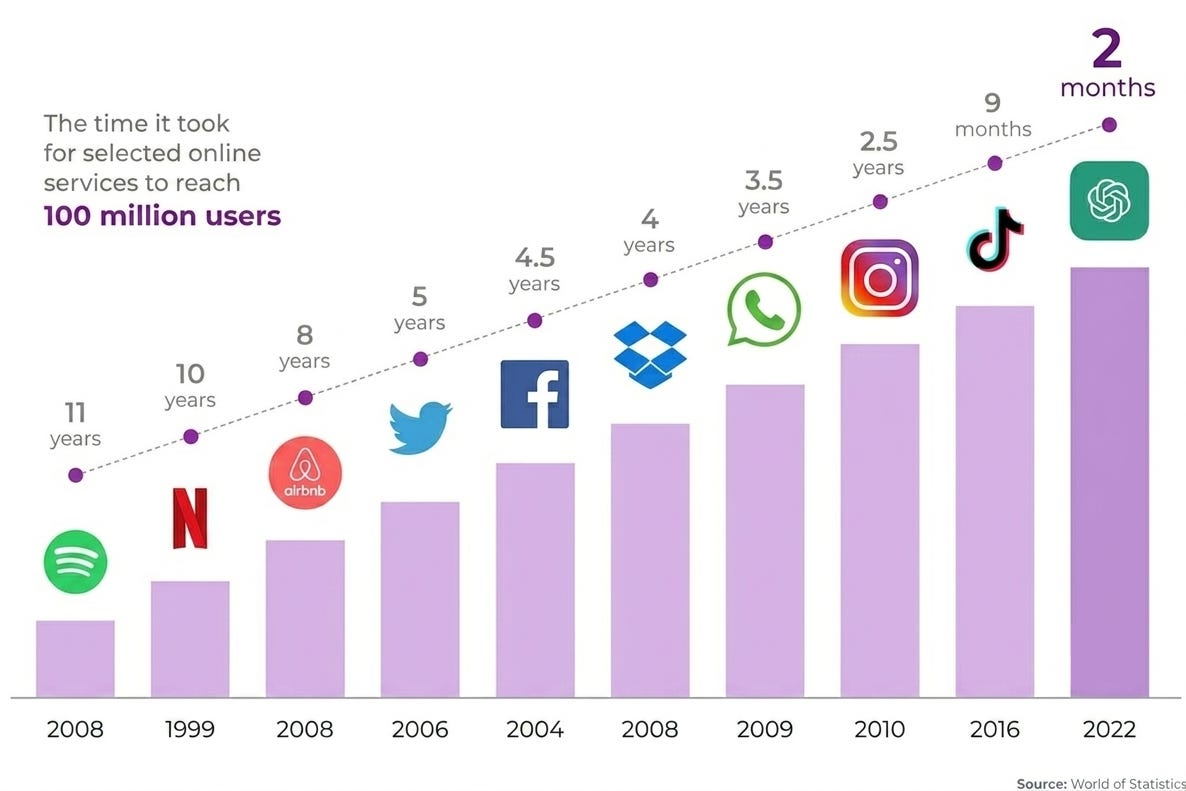
In November 2022, OpenAI released ChatGPT (built on GPT-3.5), bringing conversational AI to the mainstream and triggering a global tech race. It combined a massive Transformer model with seamless conversational alignment. It became the fastest-growing consumer application in history, sparking the current AI arms race.
Today, the market has matured beyond just raw size, splitting into distinct frontiers of optimization:
ChatGPT (OpenAI): The pioneer, moving heavily into advanced multi-modal capabilities (voice, vision) and complex reasoning architectures (like the o1/Strawberry series) that “think” before they respond.
Claude (Anthropic): Founded by former OpenAI researchers, Anthropic focused heavily on AI safety, steerability, and structural alignment (Constitutional AI), resulting in models highly praised for nuanced writing, coding, and large context windows.
Gemini (Google): Built from the ground up as a native multi-modal model, deeply integrated into an ecosystem with massive data advantages and pioneered incredibly massive context windows (millions of tokens).
Grok (xAI): Elon Musk founded xAI to build Grok, an LLM integrated closely with real-world data from the X (formerly Twitter) platform, designed with a more witty, unfiltered personality.
Growing Pains
In the arc of history, technological innovation has been the harbinger of a sort-of industrial cycle. A new technology triggers the sunsetting of “old” industries while simultaneously birthing “new” industries.
Scientists will recognize this process as a paradigm shift, an idiom popularized by the American historian Thomas Kuhn in his book The Structure of Scientific Revolutions. For Kuhn, a paradigm is a complete worldview that encompasses a universally recognized framework that a community shares. Once a paradigm is established, scientists enter a phase Kuhn called Normal Science, in which the paradigm’s core rules are taken for granted and the theory is extended (ex. radioactivity is an established paradigm so we discover more radioactive elements and expand its applications to cancer biology). Inevitably, normal science encounters anomalies, experimental results that contradict the expectations of the paradigm. Initially, these anomalies are ignored, dismissed as experimental error, or swept under the rug with minor tweaks to the existing theory. However, as anomalies pile up and begin to undermine the core tenets of the framework, the scientific community loses confidence. The discipline enters a state of crisis, characterized by professional insecurity, philosophical debates, and the emergence of competing, radical theories (ex. religious organizations denounce Galileo’s theory that the Earth orbits the Sun). The crisis is resolved when a completely new paradigm emerges that can not only explain all the successes of the old paradigm but also neatly resolve the critical anomalies that caused the crisis. This transition from the old worldview to the new one is the paradigm shift. It is not a gradual transition; it is a sudden, sweeping revolution that fundamentally changes how scientists see the world. However, paradigm shifts largely concern the acceptance of technological innovation by experts. How does technological innovation percolate through society?
This process is recognized by techies as creative destruction, a term popularized by the Venezuelan economist Carlotta Perez in her book Technological Revolutions and Financial Capital. Every cycle starts with a cheap, ubiquitous key input (like oil, microchips, or steel) that changes the logic of how everything is produced. Perez divides the industrial cycle (typically 50-60 years) into three distinct phases:
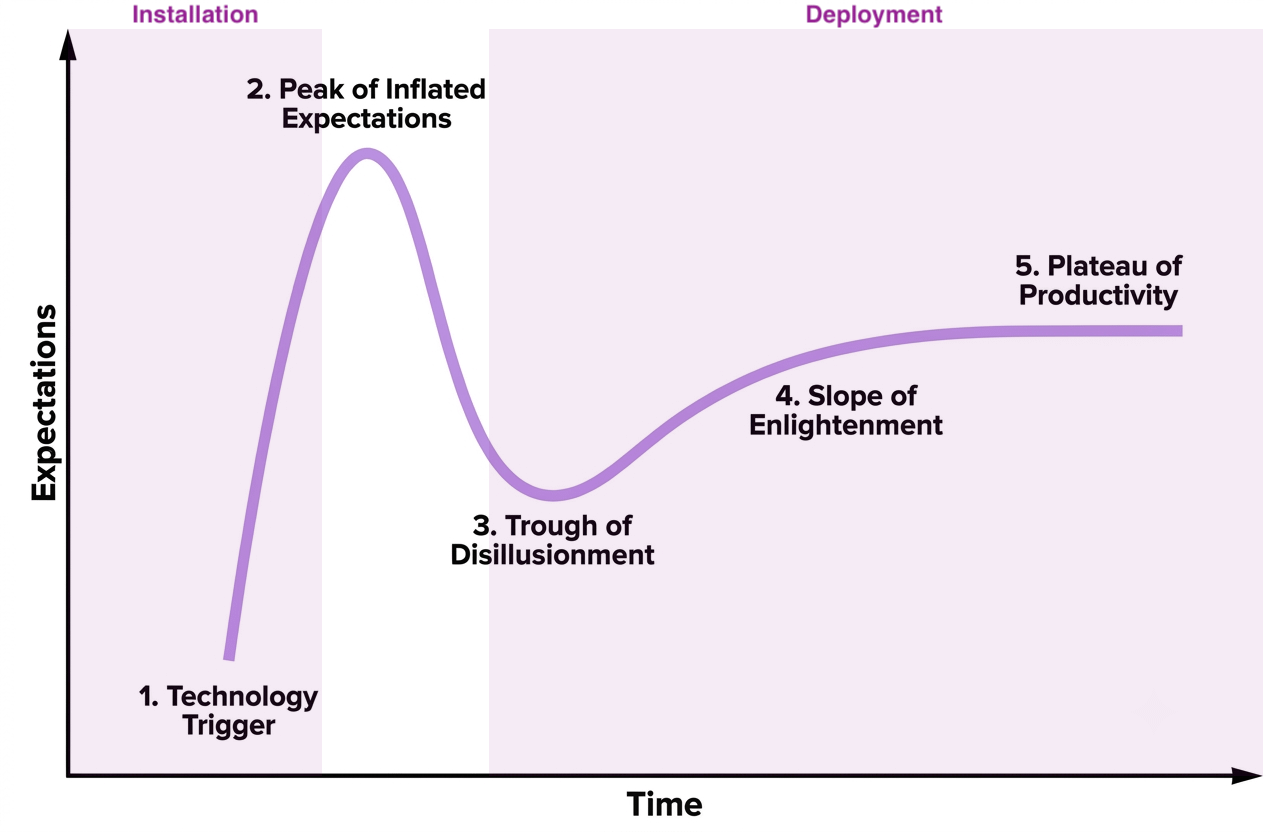
The Installation Period: This is the initial, highly disruptive phase of creative destruction. The new technology erupts into an economy dominated by mature, stagnant industries. Since established institutions and banks are hesitant to back unproven technologies, speculative financial capital (venture capitalists, investment banks) steps in. Financial capital pours immense amounts of money into building the new infrastructure. This creates a massive economic divergence: a booming, high-tech sector versus a decaying, obsolete “old economy.” This inevitably culminates in a massive asset bubble (e.g., the Railway Mania of the 1840s or the Dot-com bubble of 2000).
The Turning Point: The frenzy phase always ends in a financial crash. However, Perez argues this crash is a necessary part of creative destruction. The bubble, while destructive, leaves behind a fully built infrastructure (e.g., thousands of miles of fiber-optic cables or railway tracks) that is now cheap to use. The Turning Point is a period of political and social choice. For creative destruction to move forward, the state must step in to regulate the financial markets and establish new institutional frameworks to guide the new technology.
The Deployment Period: Once the rules of the game are established, the economy enters a new golden age. The focus shifts from financial speculation to production capital, actual businesses using the new technology to generate real goods and services. The new technology is no longer a disruptive outsider; it becomes the standard operating fabric of the entire global economy (e.g., the post-WWII boom of mass production, or the widespread integration of the internet across all industries in the 2010s). Eventually, the technology matures, markets saturate, and growth slows down. Financial capital begins looking for the next big thing, setting the stage for the next technological revolution to emerge and destroy the current order.
The Gartner Hype Cycle is a great visual depiction of creative destruction, mapping out its initial frenzy, crash, and gradual re-expansion.
Labors of Love
For millennia, stretching from the ancient world through the medieval period and into the 18th century, virtually every manufactured object was the product of an artisan. Whether it was a horseshoe, a wool cloak, a wooden chair, or a glass vial, goods were made by hand, using localized, highly specialized knowledge. In medieval Europe and many other global cultures, artisanship was strictly regulated by guilds, powerful associations of master craftsmen. The guild system structured a worker’s entire life through a strict hierarchy:
Apprentice: A young person bound to a master for several years, working for room and board while learning the mysteries of the trade.
Journeyman: A skilled worker who had completed their apprenticeship and earned a wage, often traveling to study under different masters to perfect their craft.
Master: A craftsman who had produced a masterpiece judged worthy by the guild, allowing them to open their own shop, train apprentices, and sell goods.
The earliest guilds trace their roots back to ancient Mesopotamia (starting 2200 BCE). While they weren’t called guilds, highly structured associations of artisans existed under the Akkadian and Babylonian empires. King Naram-Sin of Akkad standardized weights, measurements, and lengths specifically to unify the work of artisan groups across cities. Later, the Code of Hammurabi (1750 BCE) explicitly laid down legal wage protections and standard rates for specific trades, such as fixed shipbuilder wages and ferry rates, indicating an organized, state-recognized class of skilled laborers. The original Code is inscribed on a basalt slab on display at the Louvre (called “The Louvre stele”).

Guilds endured through the Roman Republic & Empire (“Collegium”) and survived in the Byzantine Empire after the Western Roman Empire collapsed. As Europe stabilized after the Dark Ages, early versions of the modern word guild began to appear (likely derived from the Anglo-Saxon gylta or the Germanic gild, meaning “to pay” or “sacrifice”), although they were closer to religious fraternities than business cartels. By the 11th and 12th centuries, the revival of trade, the growth of independent medieval cities, and the emergence of a money economy caused these religious fraternities to split into the highly structured, economically dominant institutions we know today. They divided into two strict categories:
Merchant Guilds: As international trade routes reopened, merchants traveling between towns faced immense dangers from bandits, pirates, and predatory feudal lords. Merchants banded together into Merchant Guilds for physical protection on the road. Once they grew wealthy, these guilds bought charters from kings or lords. These charters granted the guild a total monopoly on trade within a specific city. If you weren’t a member of the local Merchant Guild, you could not sell goods retail, you were hit with massive taxes, or you were banned from the city gates entirely.
Craft Guilds: As cities grew, the population of craftsmen inside the walls exploded, leading to intense specialization. Craft fields broke away from the broader merchant guilds to form their own specific Craft Guilds (e.g., the Weavers, the Blacksmiths, the Goldsmiths, the Shoemakers). It was these 12th-century Craft Guilds that perfected the iconic three-tier career progression designed to tightly control the quality of goods and protect their economic security (apprentice, journeyman, master). By enforcing this structure, the first true craft guilds ensured that no rogue operator could flood the city with cheap, low-quality products, effectively establishing the stable, localized economic paradigm that dominated human manufacturing.
By the 17th century, the domestic system emerged alongside guilds. Merchant-capitalists would distribute raw materials (like raw wool) to rural families and independent artisans, who would spin, weave, or fashion the goods in their own cottages using their own tools. The merchant would then return to buy the finished product and sell it on the market. Under both systems, the artisan possessed holistic knowledge. They understood the entire production process from raw material to finished good. They owned their tools, set their own hours, worked from home or small shops, and took deep personal pride in their unique stamp of quality. Technological innovation would soon shake this 4000+ year tradition to its core.
1st Industrial Revolution and the Luddites
The First Industrial Revolution (roughly 1760 to 1840) shattered the guilt system by separating the artisan from both their tools and their autonomy. The revolution was driven by a synergistic loop of mechanical innovation, a new energy source, and the discovery of better raw materials. To understand its scale, we have to look at the specific cluster of breakthrough technologies that drove it, and the precise, often devastating ways they impacted the artisanal class.
Before the revolution, textile production was a slow, decentralized cottage industry. A series of inventions rapidly mechanized the two core stages: spinning raw fiber into yarn, and weaving yarn into cloth. In 1733, John Kay invented the Flying Shuttle, which automated the weaving process, allowing a single weaver to weave much wider fabrics at double the speed. This created a massive yarn shortage, as weavers outpaced traditional hand-spinners. James Hargreaves would build on the idea with his 1764 debut of the Spinning Jenny, a hand-powered machine that allowed one worker to spin multiple spools of thread simultaneously. Five short years later in 1769, Richard Arkwright invented the Water Frame, which bypassed human muscle entirely by using water power to drive spinning machines. It produced yarn faster and stronger than the Jenny, but the machines were too massive for a home. They required a dedicated building next to a fast-flowing river, effectively birthing the modern factory. The final straw yarn came in 1785, when Edmund Cartwright invented the Power Loom and mechanized the weaving side to catch up with the abundance of machine-spun yarn, fully automating textile production from raw material to finished fabric.
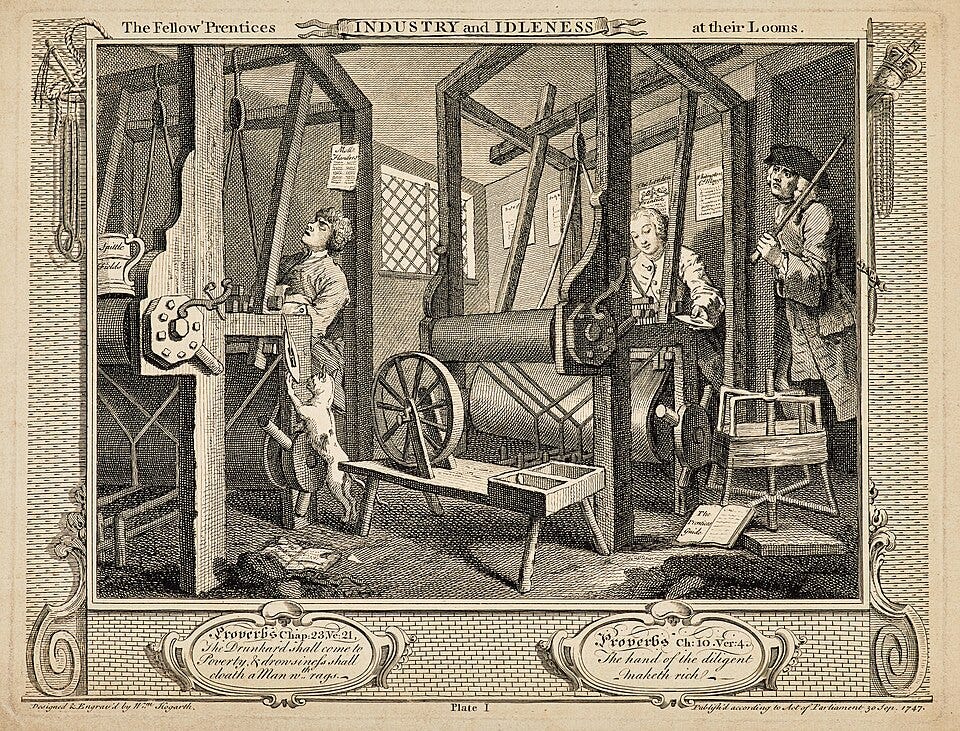
While water power launched the factory system, it tied factories to rural, rushing rivers. The steam engine liberated manufacturing from geography. Building on Thomas Newcomen’s primitive pump design, James Watt added a separate condenser and converted the engine’s linear motion into rotational power, resulting in the Rotary Engine (1776–1781). This enabled factories to be built anywhere, specifically near coal fields, shipping ports, and booming urban labor pools. Steam power ran dozens of mechanical looms and jennies simultaneously via complex systems of ceiling shafts, belts, and pulleys.
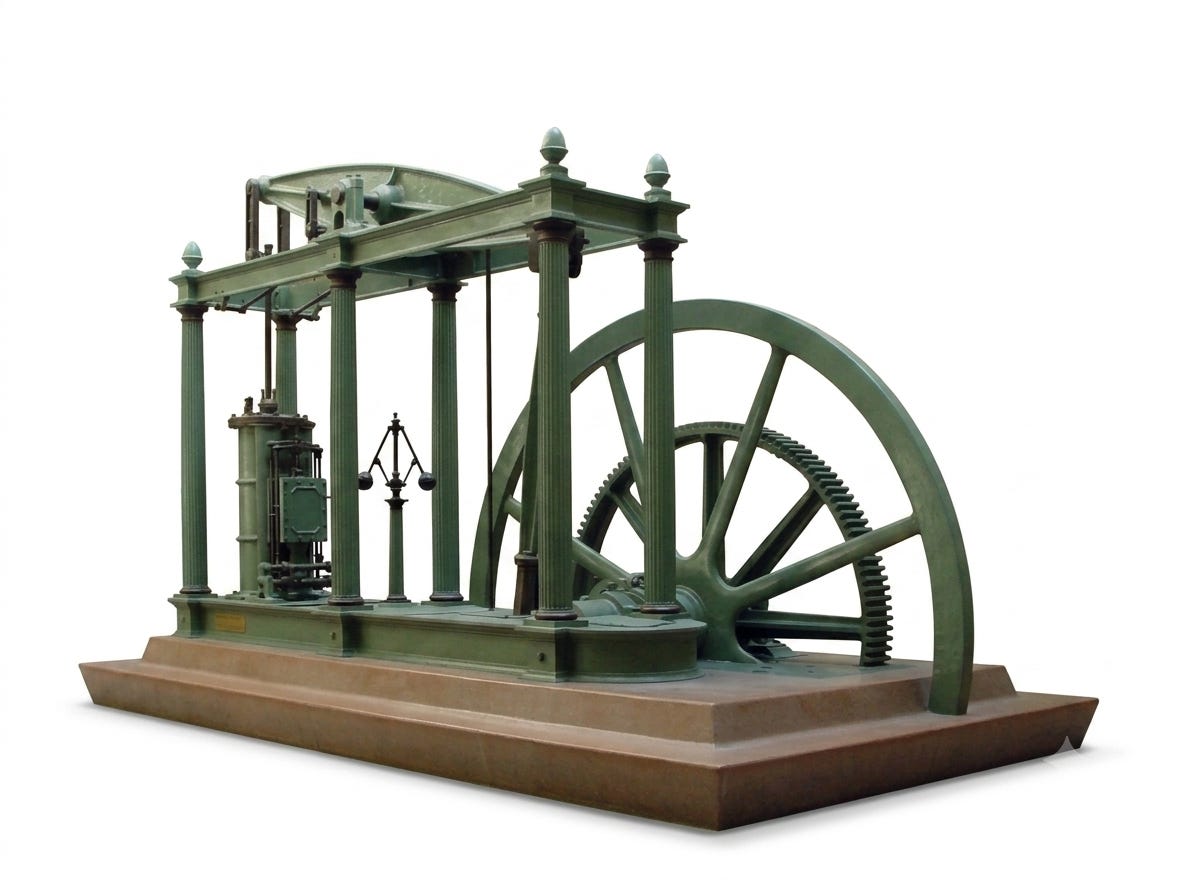
Machines and steam engines required stronger materials than wood and animal fat. Abraham Darby discovered how to use coke (purified coal) rather than scarce wood charcoal to smelt iron ore. Henry Cort invented a way to refine pig iron into high-quality wrought iron on an industrial scale (The Cort Process/Puddling). This provided the durable, cheap metal needed to construct heavy machinery, steam boilers, bridges, and eventually, railways.
For centuries, the artisan was the backbone of production. They owned their tools, possessed holistic knowledge of their craft, managed their own schedules, and dictated the price of their goods. The First Industrial Revolution systematically dismantled this entire lifestyle through three structural shifts:
Separation from the Means of Production: Under the traditional domestic system, an artisan weaver or spinner worked out of their own cottage. They owned their spinning wheel or handloom. Since steam engines and iron power looms were incredibly expensive and physically massive, no individual artisan could afford to buy or house them. Capitalist entrepreneurs bought the technology and built the factories. Since hand-turned tools could not compete with the speed, volume, and low cost of steam-driven machinery, the artisan’s tools became economically worthless overnight. To survive, artisans had to sell the only asset they had left: their time and labor as wage workers inside someone else’s factory.
Extreme Deskilling and Wage Depression: In the guild and artisanal systems, value was tied to human skill. A master weaver spent a lifetime learning how to handle different fibers, adjust yarn tension by touch, and execute complex patterns. The factory system flipped this dynamic. The skill was transferred from the human to the machine. A power loom did the precise work of weaving automatically. The factory owner no longer needed an expensive master craftsman. They could hire an untrained laborer (frequently women and children, who were paid drastically lower wages) to perform simple, repetitive maintenance tasks like sweeping debris, clearing jams, or tying broken threads. The artisan class saw their wages plummet as their highly specialized knowledge was rendered obsolete.
The Loss of Freedom and the Tyranny of the Clock: Artisans were used to a task-oriented rhythm. They worked until the job was done, took breaks when they wished, and historically celebrated “Saint Monday”, taking Mondays off to recover from the weekend or tend to their family gardens. Factories replaced this natural rhythm with the tyranny of the clock and the machine. Workers were bound to the relentless speed of the steam engine. If the belts were turning, the human had to keep pace. Factory bells dictated precisely when to arrive, when to eat, and when to leave. Systems of strict fines were introduced for being minutes late, talking on the shop floor, or looking out a window. The artisan went from being an independent creator who took pride in a finished masterpiece to an interchangeable, highly policed machine tender, suffering what philosophers and economists termed profound psychological alienation from their labor.
This disruption did not happen quietly. Between 1811 and 1816, displaced textile artisans in England organized a violent, underground resistance movement. Invoking the name of a mythical leader, Edward Ludd, these Luddites broke into factories at night to systematically smash wide-frame knitting straight-edges and power looms with sledgehammers. Contrary to the modern misuse of the term, the Luddites were not blindly afraid of technology. In reality, the original Luddites were highly skilled, deeply literate artisanal cloth dressers, weavers, and knitters in northern England who were protesting how automated machinery was being used to bypass fair wages, degrade standard working conditions, and flood the market with cheap, poorly made goods, destroying their communities and autonomy in the process.
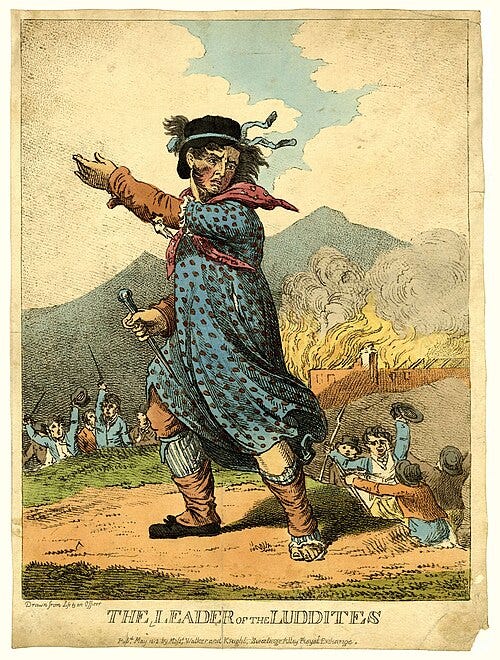

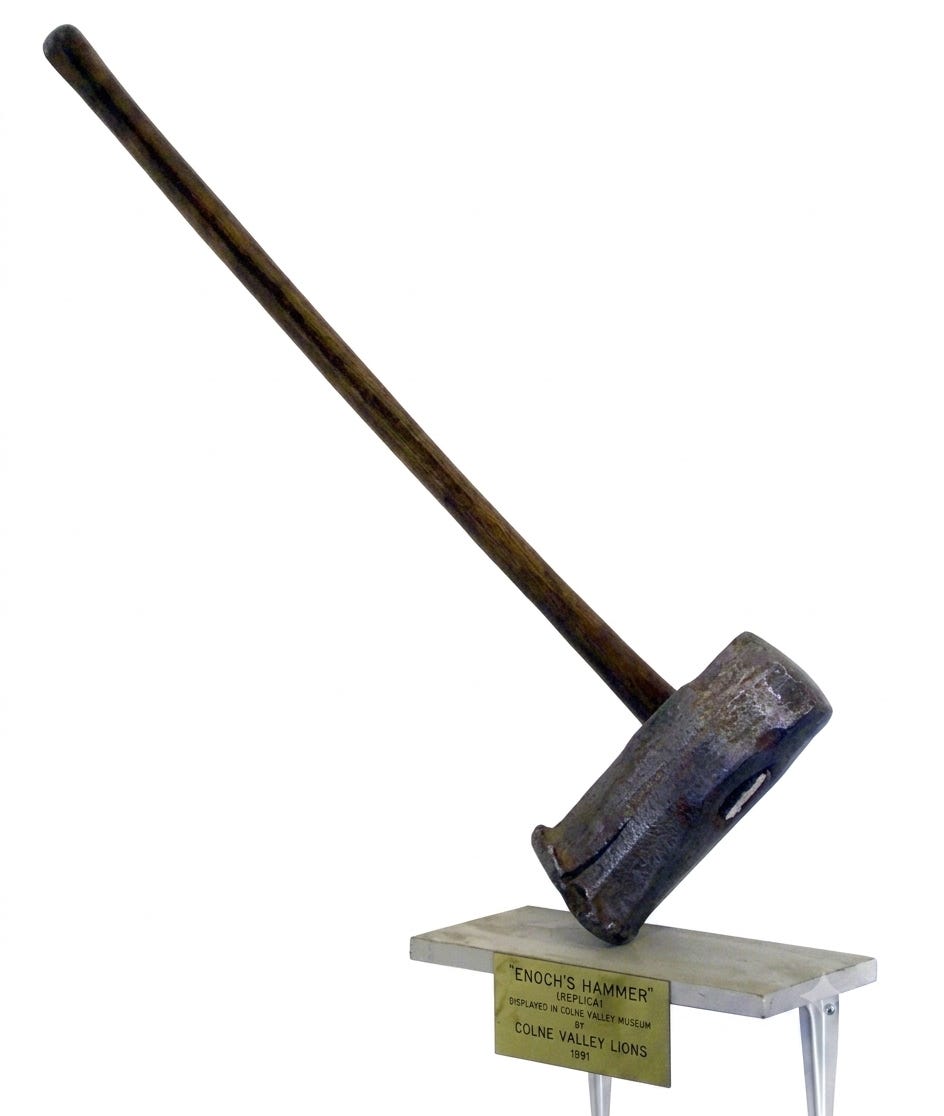
According to folklore, Edward Ludd was a young weaver’s apprentice who, in a fit of rage against a cruel master in the late 18th century, took a sledgehammer and smashed two knitting frames. The rebels adopted his name, turning him into a phantom folk hero. Letters threatening factory owners were signed by “Ned Ludd from Sherwood Forest.” Since “Ned Ludd” didn’t exist, the state could never capture the leader of the rebellion. The Luddites operated as a clandestine, oath-bound secret society. They utilized complex handshakes, code words, and night-time drills on the dark moors of northern England. Their primary weapon was the Enoch, a massive, custom-forged sledgehammer manufactured by the local blacksmithing firm Enoch & James Taylor. In a brilliant twist of dark irony, the Taylor firm also manufactured the iron shearing frames used in the factories. The Luddites’ rallying cry became: “Enoch made them, and Enoch shall break them!” Crucially, the Luddites were highly selective. If a factory owner paid fair wages and used traditional, high-quality production methods, the Luddites would march right past his facility without touching a single brick. But if an owner used automated frames to undercut human labor, his machinery was systematically reduced to scrap iron.
By 1812, the rebellion had escalated from property damage to open warfare. Luddites began ambushing factory owners, leading to bloody shootouts at fortified mills, such as the famous attack on Rawfolds Mill in Yorkshire. Terrified of a French-style revolution on British soil, the government reacted with unprecedented ferocity. The British State deployed more than 12,000 soldiers to the industrial north to hunt down the Luddites. To put this in perspective, this domestic occupation force was larger than the army the Duke of Wellington commanded during the opening of the Peninsular War against Napoleon. Passed in February 1812, the Frame Breaking Act made the destruction of mechanized looms an offense punishable by death. During the parliamentary debate over the bill, the romantic poet Lord Byron stood up in the House of Lords as one of the very few public figures to defend the workers, famously declaring:
“I have been in some of the most oppressed provinces of Turkey; but never, under the most despotic of infidel governments, did I behold such squalid wretchedness as I have seen since my return in the very heart of a Christian country... Is there not capital enough in your life-blood? And must a frame be placed in the scale with the life of a man?”
Lord Byron
The deployment of the army, combined with a vast network of paid government spies, eventually broke the resistance movement. In 1813, the state held a series of high-profile show trials in York. Dozens of suspected Luddites were convicted. Seventeen men were publicly [redacted], and dozens more were packed onto prison ships and transported to penal colonies in Australia for life. By 1816, the mass [redacted], coupled with a slight easing of the economic depression, brought a quiet, bitter end to the uprising.
The Luddites lost because they were outgunned by the state machinery of the world’s most powerful empire. Their true legacy is not a rejection of technology, but a profound question about progress: Who does innovation serve? The Luddites argued that if a machine creates immense wealth for one factory owner while throwing an entire community into starvation and poverty, that technology isn’t a benefit to civilization. Rather, it is a weapon and and instrument of subjugation. This debate that directly echoes through our modern anxieties surrounding AI.
2nd Industrial Revolution and the Communists
The Second Industrial Revolution (roughly 1870 to 1914) was a phase of rapid industrialization that took the breakthroughs of the first revolution and scaled them into a massive, globally integrated system. If the First Industrial Revolution was defined by coal, iron, and local textile mills, the Second was defined by electricity, steel, chemicals, and giant corporations. For the remaining artisanal classes, this era both challenged their wages and systematically dismantled the intellectual & structural concept of skilled craftsmanship.
Before the 1870s, steel was a luxury metal, difficult and expensive to manufacture in large quantities. The Bessemer process (and later the open-hearth furnace) allowed for the mass purification of pig iron into high-quality steel by blowing air through molten metal to burn off impurities. Steel production skyrocketed, while costs plummeted. This cheap, ultra-strong metal allowed for the construction of transcontinental rail networks, massive steamships, skyscrapers, and heavy industrial machinery that could withstand immense pressure.
The reliance on centralized steam engines running massive, dangerous belt-and-pulley systems gave way to two far more flexible power sources. The development of alternating current (AC) grids allowed electricity to be transmitted over vast distances. Factories no longer needed to be built near coal fields or rivers. They could be placed anywhere. Furthermore, small, efficient electric motors could be attached to individual machines, making factory layouts far safer and more efficient. Fueled by newly refined petroleum, this technology laid the groundwork for automobiles, aviation, and decentralized mechanical power.
Numerous other industries evolved rapidly. The birth of synthetic dyes, plastics, artificial fertilizers, and pharmaceuticals transformed agriculture, healthcare, and consumer goods. The telegraph, telephone, and transatlantic cables allowed corporations to coordinate logistics, supply chains, and market prices globally in real time.
By 1870, the independent cottage weaver was largely a thing of the past. However, a vast class of highly skilled, proud craftsmen still dominated other sectors: machinists, blacksmiths, gunsmiths, clockmakers, carriage builders, and toolmakers. These artisans retained high status because assembling complex machines still required human judgment, hand-filing, and custom fitting. The Second Industrial Revolution targeted this final stronghold of artisanal pride through three crushing corporate and managerial strategies:
Ultra-Precise Interchangeable Parts: Historically, if a machine component was slightly off, an artisan machinist used a file to custom-fit the gear or piston by hand. Every complex product was slightly unique. The invention of heavy, electrified, ultra-precise machine tools (like automated lathes and milling machines) allowed factories to stamp out millions of parts that were perfectly identical down to a fraction of a millimeter. The need for an artisan’s unique touch, judgment, and fitting skill vanished. Components could be dumped into a bin and bolted together by anyone. The artisan’s hand was replaced by the machine tool’s precision.
Taylorism (Scientific Management or “white collar” work): Pioneered by mechanical engineer Frederick Winslow Taylor, Taylorism treated human beings as biological cogs in a larger machine. Taylor argued that the biggest drain on factory efficiency was worker autonomy. Management explicitly stole the “brainwork” from the craftsman. Engineers used stopwatches to analyze a master craftsman’s movements, stripped away any “wasted” motion, and broke a complex, holistic job down into its smallest, most mindless components. Under Scientific Management, the worker was explicitly instructed not to think, innovate, or self-pace. The comprehensive knowledge of how to build an entire product from scratch was abstracted away into a corporate manual, completely separating the execution of labor from the conception of labor.
The Moving Assembly Line: Pioneered by Henry Ford for the Model T in 1913, the moving assembly line was the logical conclusion of Taylorism and the ultimate disintermediation of the worker. Instead of a group of skilled workmen gathering around a stationary product to build it, a motorized conveyor belt dragged the product past stationary, completely deskilled laborers. On a Ford assembly line, the worker lost control over their own physical pacing. The machine, regulated by the factory’s electricity, dictated exactly how fast the human had to move. A worker might spend ten hours a day doing nothing but turning a single nut on a chassis as it passed by. If they paused for a few seconds, the entire global supply chain stalled.
The Second Industrial Revolution required massive capital to build steel mills, transcontinental railroads, and electrical grids. This led to the rise of the first mega-corporations, trusts, and monopolies managed by Robber Barons (like Andrew Carnegie, John D. Rockefeller, and J.P. Morgan). While corporate titans amassed fortunes that rivaled the GDP of entire nations, the workers who operated the machinery lived in cramped, disease-ridden tenements, working 12-to-14-hour days with zero job security, health insurance, or pensions. The contrast between opulent wealth and squalid poverty was impossible to ignore.
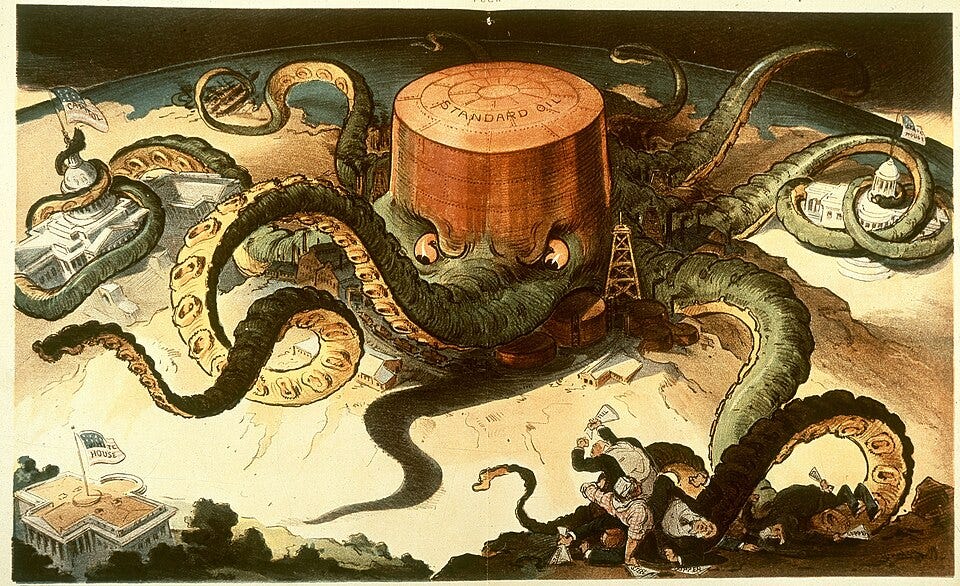

As Taylorism and scientific management stripped workers of their intellectual ownership of labor, work became profoundly monotonous and dehumanizing. Workers felt a deep sense of psychological alienation. They no longer saw themselves in the products they created. A worker on an assembly line was merely an appendage to an electrified machine. Events like the Haymarket Affair (1886) and the Homestead Strike (1892) in the United States, alongside brutal crackdowns on striking miners and factory workers across Europe, showed that governments would readily deploy the military, police, and private militias (like the Pinkertons) to shoot striking workers and protect corporate property.
By the dawn of World War I, the artisan had been thoroughly transformed into the modern industrial proletariat, a wage laborer who owned no tools, possessed no unique monopoly on skill, and performed highly repetitive, specialized tasks. The pride of saying “I made this” was replaced by the bleak observation of “I operate the machine that makes this.” This alienation from the holistic process of creation fueled the massive, organized labor union movements of the late 19th and early 20th centuries, as workers realized their only remaining leverage was no longer their individual talent, but their collective numbers. The story of modern communist theory does not begin in a grand parliament or on a smoky battlefield, but in the damp, soot-choked streets of industrial Europe during the 1840s. It is a narrative driven by an unlikely partnership between two brilliant German minds: Karl Marx, a penniless, fiercely academic radical philosopher, and Friedrich Engels, the wealthy son of a conservative textile tycoon. Together, they looked at the smoking factories of the First Industrial Revolution and saw not just a change in technology, but a structural prison that was tearing the human soul apart.
In 1842, Karl Marx was a young, combative journalist in Cologne, editing a radical newspaper. He was deeply steeped in the abstract philosophy of Georg Wilhelm Friedrich Hegel, who argued that history progressed through a clash of ideas, a thesis colliding with an antithesis to create a new synthesis. However, Marx was growing frustrated with pure abstraction. He noticed that the local government was passing laws criminalizing poor peasants for collecting fallen firewood from private forests. Marx began to realize that the driving force of human society was economics and property law, not merely spirit or ideas. Meanwhile, across the North Sea, a twenty-two-year-old Friedrich Engels was being sent by his father to Manchester, England, to help manage the family cotton mill, Ermen & Engels. The senior Engels hoped the trip would cure his son of his radical political leanings. It had the opposite effect.
Guided by Mary Burns, a fierce working-class Irish factory hand who became his lifelong partner, Engels walked through the squalid slums of Manchester. He smelled the open sewers, saw children missing limbs from factory machines, and witnessed families crammed ten to a room. In 1845, he published The Condition of the Working Class in England, a devastating piece of investigative journalism. Engels provided something Marx lacked: raw, empirical, firsthand evidence of how industrial capitalism operated on the factory floor. When Marx and Engels met at the Café de la Régence in Paris in August 1844, they talked for ten days straight. They realized their thoughts were complementary. Marx had the philosophical framework and Engels had the economic framework. A lifelong intellectual brotherhood was born.
Marx and Engels set out to build a new theory of human history that was grounded entirely in the physical world. Marx famously stated that he found Hegel’s philosophy standing on its head, and that he chose to turn it right side up. They called their approach Historical Materialism. They argued that the foundation of any human society is its economic base, the “forces of production” (tools, technology, factories) and the “relations of production” (who owns them and who works them). Everything else (religion, law, politics, art, and philosophy) was merely a superstructure built on top of that economic foundation, designed to protect the interests of the ruling class. From this, they deduced that human history was not a peaceful evolution, but a recurring cycle of class warfare. In ancient times, it was Master versus Slave. In the Middle Ages, it was Feudal Lord versus Serf. Now, under the Industrial Revolution, the conflict had been distilled into its final, purest form: the Bourgeoisie (the capitalist factory owners) versus the Proletariat (the working class).
By 1847, Marx and Engels had joined a small, underground network of radical European workers called the League of the Just, which they promptly convinced to rename itself The Communist League. The League asked the duo to write a document explaining their secretive philosophy to the world. Working through the winter in a frantic burst of energy, they produced a slim, forty-page pamphlet. Published in London in February 1848, it opened with a line that sent a shiver through the courts of Europe: “A spectre is haunting Europe; the spectre of communism.”
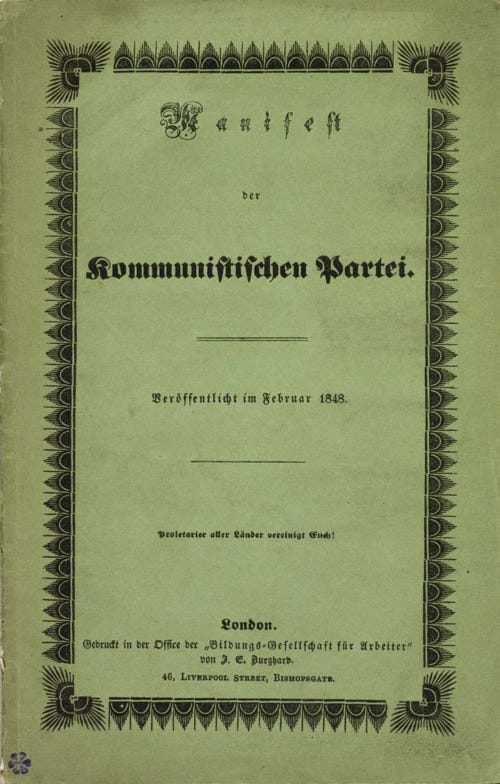

The Communist Manifesto was an electrifying synthesis of their theory. It praised capitalism for its staggering productive power, noting that it had accomplished wonders far surpassing Egyptian pyramids and Roman aqueducts. However, it prophesied that, like Mary Shelley’s Frankenstein, the bourgeoisie had conjured a monster it could no longer control. By packing thousands of resentful, exploited workers onto factory floors and into dense urban slums, capitalism was organizing and weaponizing its own executioners. The Manifesto laid out a radical roadmap: the proletariat would rise up, overthrow the bourgeoisie, centralize the means of production in the hands of a worker-led state, and systematically abolish private property. Eventually, as class distinctions faded, this transitional socialist state would wither away entirely, leaving behind a classless, stateless, communist society based on a simple maxim: “From each according to his ability, to each according to his needs.”
Just days after the Manifesto was printed, revolutions broke out across Europe, in France, Germany, Italy, and Austria. For a moment, it seemed Marx and Engels’ prophecies were coming true. However, the uprisings of 1848 were brutally crushed by the old aristocratic and monarchical regimes. Marx was exiled to London, where he spent the rest of his life living in deep poverty, supported almost entirely by the financial allowance Engels sent him from his Manchester textile business. Sitting day after day in the Reading Room of the British Museum, Marx poured his remaining energy into a massive, multi-volume economic autopsy of the capitalist system: Das Kapital. When Marx died in his armchair in 1883, the global communist movement was still small and fragmented. Engels spent his remaining twelve years organizing Marx’s messy, handwritten notes to publish the final volumes of Das Kapital, ensuring their shared life’s work would survive.
The divergence between the twentieth-century communist experiments and the trajectory of capitalist economies offers one of the most significant case studies in modern political economy. While Marxist theory promised a stateless, classless paradise of abundance, its twentieth-century implementations in places like the Soviet Union (USSR), East Germany (GDR), Vietnam, and North Korea consistently led to economic stagnation, bureaucratic paralysis, and authoritarian control. Conversely, the regulated, state-supported capitalist models of the United States, Western Europe, Europe, post-WWII Japan, and South Korea managed to generate unprecedented wealth and foster robust, prosperous middle classes.
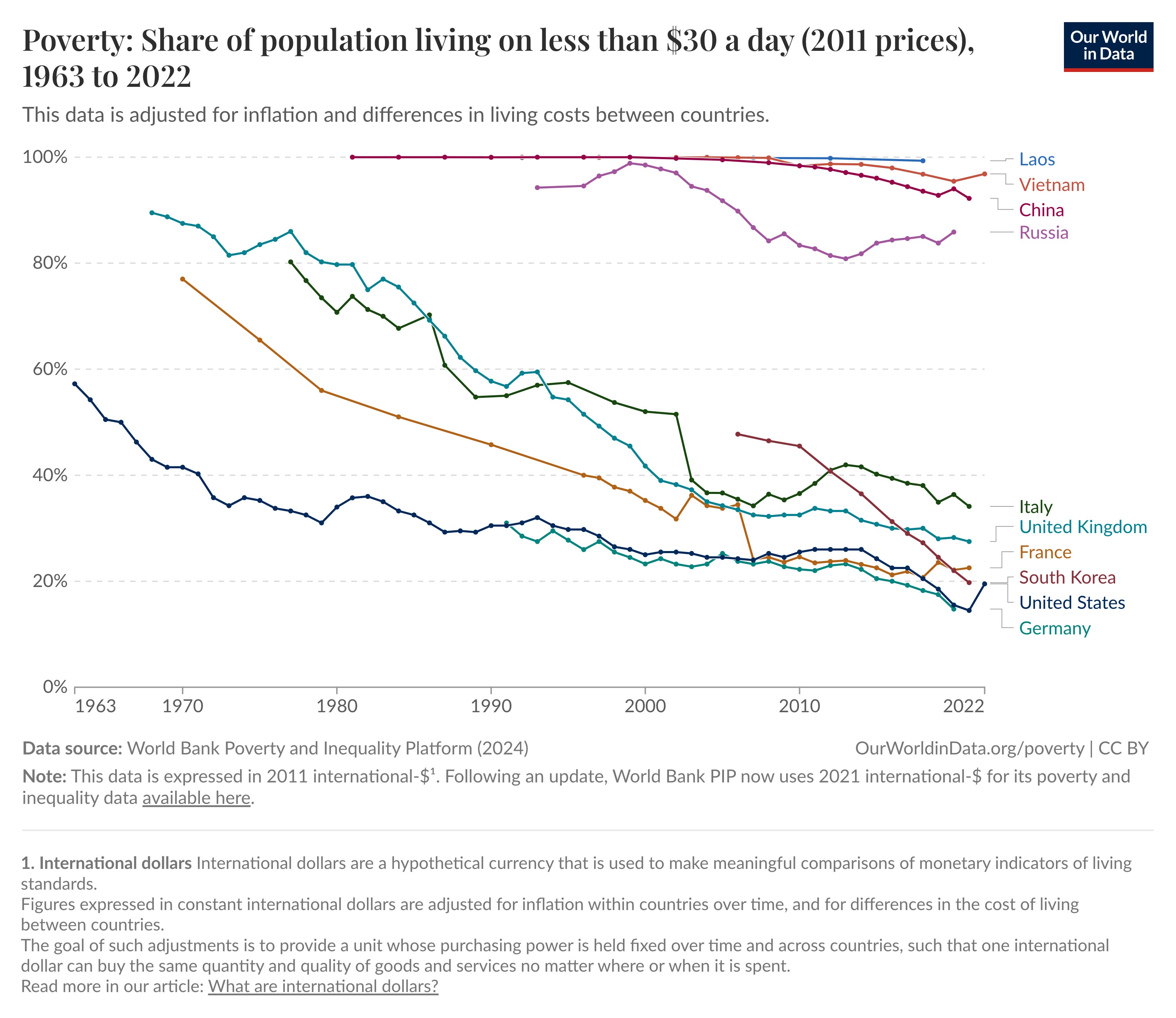
Capitalism recognized that a mass-production economy requires a mass-consumption society. This feedback loop, famously catalyzed by Henry Ford’s decision to pay his workers enough to afford the cars they built, became the bedrock of the post-WWII middle class. When workers earn disposable wages, they buy homes, automobiles, and electronics. This massive consumer demand drives corporate profits, which incentivizes businesses to innovate, scale up, and hire more workers, steadily lifting millions out of poverty and into a stable economic center.
The defining feature of the middle class in the West and East Asia was the ability to build intergenerational wealth, primarily through homeownership and private capital investments. Programs like the U.S. GI Bill and state-backed mortgage systems allowed average citizens to buy property on credit. Owning a home provided families with equity, financial stability, and collateral to start small businesses. In a communist system, where all land and property belonged to the state, citizens could never convert their decades of hard work into transferable personal wealth.
The economic miracles of Japan (post-WWII) and South Korea (the “Miracle on the Han River”) demonstrate that the rise of the middle class was heavily accelerated by strategic cooperation between the state and the private sector. Rather than running the economy themselves, governments in Tokyo and Seoul used tax incentives, infrastructure investments, and credit guidance to back giant, competitive private conglomerates (like Toyota and Sony in Japan, or Samsung and Hyundai in South Korea). During the Cold War, the United States opened its massive consumer markets to Japanese and South Korean exports while pouring billions in aid and security into these nations to ensure they stood as prosperous, capitalist bulwarks against regional communist expansion.
Despite the backlash to the 1st and 2nd Industrial Revolutions, new industries rose to replace the disrupted industries:
1st Industrial Revolution: Hand-spinners, cottage weavers, traditional blacksmiths, and small-scale farmers were disrupted. They were replaced with industrial machinists, boiler makers, and mechanical engineers in factories. The building and operation of railroads became one of the largest employers in the world. It absorbed millions of displaced agricultural workers and former artisans, employing them as track-layers, locomotive engineers, station masters, and cargo handlers. Mass production led to the rise of wholesaling, warehousing, and modern retail industries.
2nd Industrial Revolution: Specialized machinists, custom carriage-makers, independent farmers, and small-scale merchants were disrupted. In their wake, rose the professional middle class (“white collar”), technical blue-collar workers (plumbers, electricians, etc.), and the modern hospitality, entertainment, and commercial service industries.
Conclusion
When we look at the trajectory of human innovation through the lenses of Kuhn, Perez, and the historical wreckage of the Industrial Revolutions, a striking pattern emerges. We are living through the early, volatile Installation Period of a brand-new paradigm of artificial intelligence (AI). The parallels are impossible to ignore. The 1st Industrial Revolution separated the artisan from their physical tools, moving labor from the home cottage to the water-powered loom. The 2nd Industrial Revolution separated the artisan from their intellectual workflow, using Taylorism and the assembly line to strip away autonomous judgment and turn humans into cogs. The Generative AI Revolution represents the ultimate abstraction: it is beginning to separate the worker from their cognitive execution. Tasks that once required years of specialized training (drafting code, analyzing data, or rendering illustration) can now be autocompleted in seconds by a Transformer architecture trained on the collective output of human history.
If we blindly follow the script of the past, this looks like a familiar doom, the ultimate deskilling of cognitive labor, creating a deeply alienated white-collar proletariat. When an LLM can instantly generate a legal brief, a diagnostic summary, or a software script, the modern professional risks being disintermediated just like the Nottinghamshire weavers of 1811. However, history also offers a profound note of optimism. Creative destruction is cyclical. Just as the assembly line accidentally funded and organized a middle class and birthed entirely new industries in corporate strategy, technical maintenance, and leisure. Like Revolutions of the past, the AI transition will force labor to evolve. Today, we stand at the Turning Point. The choices we make now will determine whether the age of AI becomes a centralized, corporate Erebus of algorithmic replacement, or a collaborative Eden that supercharges human creativity.
That leaves us with a question: In a 3rd Industrial Revolution brought about by AI, what industries get disrupted, and what industries rises from their ashes?
Stay tuned for AI and the Decline of Artisanal Labor, Part 2, where we explore that very question.
To contact us, please send us an email at biotechreadout@gmail.com
Disclaimers
Investigational Status Disclaimer
The therapeutic candidates discussed in this newsletter are currently in clinical development and have not been approved for commercial sale by the U.S. Food and Drug Administration (FDA), the European Medicines Agency (EMA), or other global regulatory authorities. Their safety and efficacy have not been established. References to pipeline products and ongoing clinical trials involve significant risks and uncertainties. Statements regarding the potential safety, potency, or efficacy of investigational drugs reflect current hypotheses and are not a guarantee of future performance or regulatory clearance. The outcome of clinical trials is inherently unpredictable, and clinical results from earlier stages may not be predictive of results in later, larger-scale trials.
No Medical Advice Disclaimer
This newsletter is for informational and educational purposes only. The content is not intended to be a substitute for professional medical advice, diagnosis, or treatment. Always seek the advice of your physician or another qualified health provider with any questions you may have regarding a medical condition. Never disregard professional medical advice or delay in seeking it because of something you have read in this publication.
No Patient-Provider Relationship Disclaimer
The information provided in this newsletter is for educational and analytical purposes only. Receipt of this information, or any interaction with this content, does not create a physician-patient, pharmacist-patient, or any other professional-provider relationship between you and the authors or publishers. This newsletter should not be used as a substitute for a personal consultation with a qualified healthcare professional.
Forward-Looking Statements Disclaimer
This newsletter contains “forward-looking statements” regarding future events, including clinical trial timing, regulatory milestones, and projected market performance. These statements are based on current expectations and assumptions that are subject to significant risks and uncertainties. Actual results may differ materially from those expressed or implied. We undertake no obligation to update these statements as a result of new information or future developments.
Third-Party Links & Content Disclaimer
This newsletter contains links to third-party websites, including clinical trial registries and corporate presentations. Biotech Readout does not endorse, guarantee, or assume responsibility for the accuracy or reliability of any information offered by third-party providers.
Errors and Omissions Disclaimer
While we strive for technical accuracy, the information in this newsletter is provided on an “as is” basis with no guarantees of completeness, accuracy, or timeliness. Biotech Readout assumes no liability for any errors or omissions in the content of this publication.
Non-Endorsement Disclaimer
Any reference to specific commercial products, processes, or services by trade name, trademark, or manufacturer does not constitute or imply an endorsement or recommendation by the author. All trademarks are the property of their respective owners.
No Investment Advice Disclaimer
This newsletter is for informational purposes only and does not constitute financial, investment, or legal advice. The author is not a registered investment advisor. You should consult with a professional financial advisor before making any investment decisions. The biotechnology sector is highly volatile; past performance is not indicative of future results.
Conflict of Interest Disclaimer
The author of this newsletter maintains a position of professional independence. To ensure full transparency regarding the technology infrastructure and semiconductor market segments discussed in this report, please note that at the time of publication, the author holds personal financial positions/long equity in Alphabet Inc. (Google), Taiwan Semiconductor Manufacturing Company (TSMC), and diversified S&P 500 index funds. Aside from these broad-market and specific technology holdings, the author holds no direct financial interest, equity, or options in any other individual companies mentioned in this report. No compensation has been received from any third party to feature, mention, or analyze specific corporate entities or therapeutic candidates.